テーマ:科学・技術・発明
作品形式:科学解説
用途:英語多読
対象:英検2級を目指す英語学習者
英語本文:約262語
英語難易度の評価(推定)
CEFRレベル:A2〜B1
語彙の難易度:A2〜B1中心。
文法の難易度:A1〜A2中心。
抽象的な内容の理解:A2〜B1程度。
多読素材としての適性:高い。
English Text
In 1895, a German scientist named Wilhelm Röntgen made an important discovery. He found a new kind of ray. It could pass through some objects, but people could not see it. He called it an X-ray. This discovery changed science and medicine.
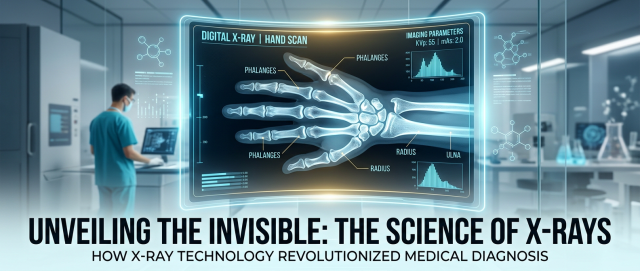
X-rays can pass through the human body. However, different parts of the body affect them in different ways. For example, bones stop more X-rays than soft parts of the body. A special machine records the rays that pass through the body. It then makes an image. In this image, bones often look white, while some other parts look darker.
Doctors use X-rays to look for broken bones and other problems. Before this technology, doctors often had to depend on what they could see or feel. Now they can examine parts of the body without surgery. This helps them make better decisions about treatment.
X-rays are also useful outside hospitals. At airports, security workers may use X-ray machines to check bags. In factories, workers can use them to find cracks inside some products. These checks can help people find problems before they cause serious damage.
However, X-rays need careful use. They are a form of radiation, and too much exposure can harm the body. Medical workers follow safety rules and use the smallest amount needed for an examination.
X-rays do not show everything, and they are not the best tool for every problem. Still, they let people see details that are hidden from the human eye. A discovery from more than a century ago remains an important tool in modern life.
語彙
radiation /ˌreɪdiˈeɪʃən/ energy that travels through space or matter as waves or particles
exposure /ɪkˈspoʊʒər/ the state of being in contact with something, such as radiation
X-ray /ˈɛksˌreɪ/ X線
surgery /ˈsɜːrdʒəri/ 外科手術
日本語対訳
X線で見えないものを見る
1895年、ヴィルヘルム・レントゲンというドイツの科学者が重要な発見をしました。彼は新しい種類の光線を発見しました。それは一部の物体を通り抜けることができましたが、人間の目には見えませんでした。彼はそれをX線と名付けました。この発見は科学と医学を変えました。
X線は人体を通り抜けることができます。しかし、体の各部分はX線に異なる影響を与えます。例えば、骨は体の柔らかい部分よりも多くのX線を吸収します。専用の装置が、体を通り抜けたX線を記録します。そして、その画像を作ります。この画像では、骨は白く見えることが多く、ほかの部分はより暗く見えます。
医師は、骨折やその他の問題を調べるためにX線を使います。この技術が登場する前、医師は目で見たり、手で触れたりして分かることに頼る場合がよくありました。現在では、手術をせずに体の内部を調べることができます。これは、治療についてより適切な判断をする助けになります。
X線は病院以外でも役立ちます。空港では、保安担当者が荷物を検査するためにX線装置を使うことがあります。工場では、製品の内部にあるひびを見つけるためにX線を使うことができます。こうした検査は、深刻な損害につながる前に問題を発見する助けになります。
ただし、X線は慎重に使用する必要があります。X線は放射線の一種であり、過度に浴びると体に害を与える可能性があります。医療従事者は安全規則を守り、検査に必要な最小限の量を使用します。
X線ですべてが見えるわけではなく、あらゆる問題に最適な検査方法というわけでもありません。それでも、人間の目では見えない細部を見ることができます。1世紀以上前の発見は、今も現代社会で重要な役割を果たしています。
制作について
本記事の英文・日本語訳・英語難易度の評価は、AIを活用して作成したものです。内容の正確性を保証するものではありません。難易度の評価は目安であり、CEFRや英検による公式な判定ではありません。