テーマ:心理・行動・認知科学
作品形式:エッセイ
用途:英語多読
対象:英検2級を目指す英語学習者
英語本文:約287語
英語難易度の評価(推定)
CEFRレベル:A2〜B1
語彙の難易度:A2〜B1中心。
文法の難易度:A1〜A2中心。
抽象的な内容の理解:A2〜B1。
多読素材としての適性:高い。
English Text
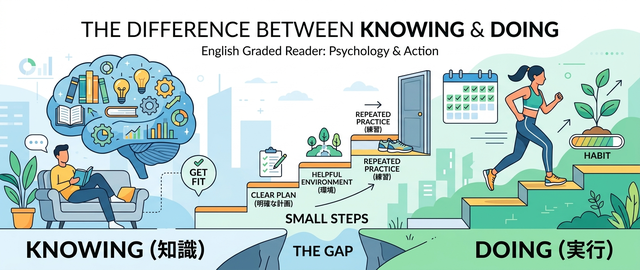
Many people know what they should do, but they do not always do it. A person may know that daily exercise is good for health, yet spend the evening on the sofa. Another person may understand the value of saving money, but still buy things without a plan. This gap between knowledge and action is common in daily life.
One reason is that knowledge does not remove every obstacle. After a long day at work, a person may feel tired. Exercise can seem difficult, even when the person knows its benefits. A general goal can also be hard to follow. “I will get fit” does not explain what to do today. A clear plan is more practical: “I will walk for fifteen minutes after dinner.”
Small actions can become part of a routine. If someone puts walking shoes by the door, it is easier to remember to go for a walk. If the walk takes place at the same time each day, it may require less effort over time. The goal is not to depend on strong motivation every day. It is to make a useful action easier to start.
It also helps to notice progress. A person can mark each walk on a calendar or write down the money saved each week. These simple records make change easier to see. When people miss a day, they do not need to give up. They can return to the plan the next day.
Knowledge still matters. It helps people choose good goals and understand the results of their choices. But action often needs a clear plan, a helpful environment, and repeated practice. Knowing what is good is an important first step. Doing it regularly is the next one.
語彙
obstacle /ˈɑːbstəkəl/ something that makes it difficult to do or achieve something
practical /ˈpræktɪkəl/ useful and suitable for a real situation
routine /ruːˈtiːn/ a usual way of doing things
motivation /ˌmoʊtəˈveɪʃən/ the feeling that makes you want to do something
progress /ˈprɑːɡrɛs/ improvement or movement toward a goal
日本語対訳
知っていることと実行することの違い
多くの人は何をすべきか知っていますが、いつも実行できるとは限りません。毎日運動することが健康に良いと知っていても、夕方になるとソファで過ごしてしまう人がいます。また、お金を貯めることの価値を理解していても、計画なしに買い物をしてしまう人もいます。知識と行動の間にあるこの隔たりは、日常生活でよく見られます。
その理由の一つは、知識があっても、すべての障害がなくなるわけではないことです。仕事で長い一日を過ごした後、人は疲れていることがあります。運動の利点を知っていても、運動することが難しく感じられる場合があります。また、漠然とした目標は実行しにくいものです。「体を鍛える」という目標だけでは、今日何をすればよいのか分かりません。明確な計画のほうが実行しやすくなります。例えば、「夕食後に15分間歩く」という計画です。
小さな行動は、習慣の一部になっていくことがあります。玄関のそばにウォーキングシューズを置いておけば、散歩に出かけることを思い出しやすくなります。毎日同じ時間に歩けば、時間がたつにつれて、それほど努力しなくても実行できるようになるかもしれません。目標は、毎日強い意欲に頼ることではありません。役に立つ行動を始めやすくすることです。
進歩に気づくことも役に立ちます。歩いた日をカレンダーに記録したり、毎週貯めたお金を書き留めたりできます。こうした簡単な記録によって、変化が見えやすくなります。一日できなかったとしても、あきらめる必要はありません。次の日に計画を再開すればよいのです。
それでも、知識は重要です。知識があれば、適切な目標を選び、自分の選択がどのような結果につながるかを理解できます。しかし、実際に行動するには、明確な計画、役に立つ環境、そして繰り返しの練習が必要なことがよくあります。何が良いことかを知るのは、大切な第一歩です。それを定期的に実行することが、次の一歩です。
制作について
本記事の英文・日本語訳・英語難易度の評価は、AIを活用して作成したものです。内容の正確性を保証するものではありません。難易度の評価は目安であり、CEFRや英検による公式な判定ではありません。