テーマ:言語・コミュニケーション
作品形式:エッセイ
用途:英語多読
対象:英検3級レベルの学習者
英語本文:約434語
英語難易度の評価(推定)
CEFRレベル:A2〜B1
語彙の難易度:A2中心、一部B1
文法の難易度:A2〜B1
抽象的な内容の理解:B1寄り
English Text
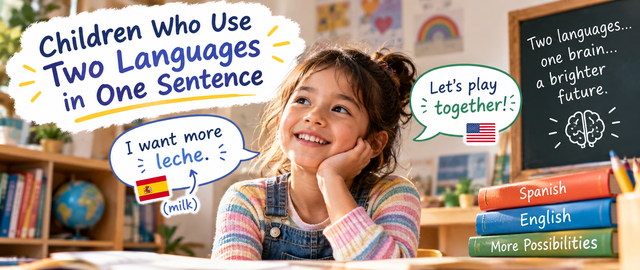
In many families around the world, children grow up with two languages. For example, a child may speak Spanish at home and English at school. Sometimes, these children use two languages in one sentence. They might say, “I want more leche,” where leche means milk in Spanish. Some parents worry that this is a mistake. But language scientists say this is very normal and interesting.
This action is called code-switching. Code-switching means changing from one language to another while talking. Both adults and children who know two languages do it. It is not because they do not know a word. Often, they know the word in both languages, but one word feels faster or more natural in that moment.
There are some clear reasons why people code-switch. First, they may switch to show feeling or to be friendly. If a child is playing with friends who speak English at school, but then sees his grandmother who speaks Spanish, he may quickly switch to Spanish to show love and respect.
Second, some ideas are easier to say in one language. For example, a child may know the English word for “sleepover” because he only does sleepovers with English-speaking friends. So he uses the English word even when he is speaking Spanish at home.
Third, code-switching can help keep a conversation going. If a child forgets a word in one language, he can use the word from the other language. This way, he does not have to stop talking. The listener who knows both languages can still understand.
Studies show that children who code-switch are not confused. In fact, their brains are working very hard. They have to know two language systems and choose which one to use for each person and each situation. This is a high-level skill. Some researchers say that children who often change between languages may become better at focusing and solving problems.
If you are raising a child with two languages, it is helpful to remember a few points. Do not say, “That is wrong,” when your child mixes languages. Instead, you can repeat the sentence in one language in a natural way. For example, if your child says, “I want more leche,” you can say, “You want more milk? Okay.” This shows you understand and gives the child the word in the other language without making them feel bad.
Using two languages in one sentence is not a problem. It is a sign that a child’s brain is using all of its language tools to communicate. It shows that language is not just about rules, but about connecting with people.
語彙
- code-switching /ˈkoʊd ˈswɪtʃɪŋ/ コードスイッチング、言語切り替え
句動詞のリスト
- grow up:育つ、成長する
日本語対訳
一つの文の中で二つの言語を使う子どもたち
世界中の多くの家庭で、子どもたちは二つの言語で育っています。例えば、子どもが家ではスペイン語を話し、学校では英語を話すかもしれません。時々、こうした子どもたちは一つの文の中で二つの言語を使います。「I want more leche」のように言うかもしれません。lecheはスペイン語で牛乳を意味します。親の中にはこれが間違いではないかと心配する人もいます。しかし言語学者はこれはとても普通で興味深いことだと言います。
この行動はコードスイッチングと呼ばれます。コードスイッチングとは話しながらある言語から別の言語に変えることを意味します。二つの言語を知っている大人も子どももそうします。単語を知らないからではありません。多くの場合、両方の言語で単語を知っていますが、その瞬間により速く、より自然に感じる方の単語を使うのです。
人々がコードスイッチングをする明確な理由がいくつかあります。第一に、感情を示したり親しみを示すために切り替えることがあります。子どもが学校では英語を話す友達と遊んでいて、スペイン語を話す祖母を見かけたら、愛情と敬意を示すために素早くスペイン語に切り替えるかもしれません。
第二に、ある考えは一方の言語の方が言いやすいことがあります。例えば、子どもは英語を話す友達としかお泊り会をしないため、sleepoverという英単語を知っているかもしれません。だから家でスペイン語を話している時でも英語の単語を使います。
第三に、コードスイッチングは会話を続けるのに役立ちます。一方の言語で単語を忘れた場合、もう一方の言語の単語を使うことができます。こうすれば話すのを止める必要がありません。両方の言語を知っている聞き手はそれでも理解できます。
研究によると、コードスイッチングをする子どもたちは混乱しているわけではありません。実際、彼らの脳はとても一生懸命働いています。二つの言語体系を知り、人や状況ごとにどちらを使うか選ばなければなりません。これは高度なスキルです。頻繁に言語を切り替える子どもは、集中したり問題を解決したりすることがより得意になるかもしれないと研究者は言います。
二つの言語で子どもを育てているなら、いくつかの点を覚えておくと役立ちます。子どもが言語を混ぜた時に「それは間違いよ」と言わないでください。代わりに、自然な方法で一つの言語で文を繰り返すことができます。例えば、子どもが「I want more leche」と言ったら、「You want more milk? Okay.」と言うことができます。これは、子どもの言っていることを理解していると示すとともに、子どもに嫌な思いをさせずに、もう一方の言語での言い方を教えることになります。
一つの文の中で二つの言語を使うことは問題ではありません。子どもの脳がコミュニケーションのためにすべての言語の道具を使っているしるしです。言語は単なる規則ではなく、人々とつながることなのだと示しています。
制作について
本記事の英文・日本語訳・英語難易度の評価は、AIを活用して作成したものです。
内容の正確性を保証するものではありません。
AIによるチェックを行っていますが、論理的な矛盾・文脈の破綻などが含まれている可能性や、歴史的事実・科学的な正確性・一般常識などに合致しない事柄が含まれている可能性があります。あくまでも英文を読む練習用の素材として考えて下さい。
なお、難易度の評価は目安であり、CEFRや英検による公式な判定ではありません。