テーマ:心理・行動
作品形式:エッセイ
対象:英検3級を目指す学習者
英語本文:約372語
英語難易度の評価(推定)
CEFRレベル:A2〜B1
語彙の難易度:A2中心、一部B1
文法の難易度:A2
抽象的な内容の理解:A2〜B1
English Text
Almost everyone has a secret little ritual. It is not a big holiday or a birthday party. It is a tiny thing you do almost without thinking.
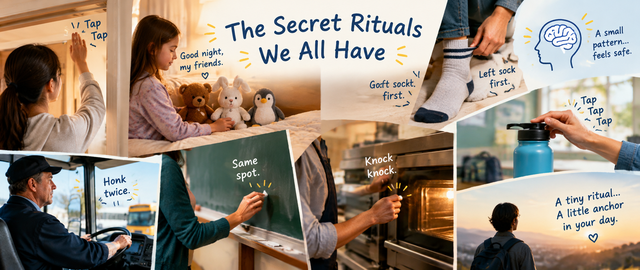
Maybe you tap the top of the doorway two times when you walk into your room. Maybe you have to say good night to each stuffed animal, in the same order, every night. Maybe you always put your left sock on first.
These tiny habits are called rituals. A ritual is a small action you do the same way, again and again, because it feels right.
Why do we make them up? Our brains like patterns. When the world feels busy or a little scary, a pattern feels safe. Doing the same little thing tells your brain, “I know what comes next.” That can calm you down.
Think about the first day at a new school. Everything is new. New faces, new sounds, new rules. If you have a little ritual, like tapping your water bottle three times before you sit down, you carry a little piece of home with you.
Rituals also help you mark moments. Saying good night to your toys is not just about the toys. It is your way of saying, “The day is done. Now it is time to rest.”
The funny part is, most people think they are the only ones who do this. But if you ask around, you will find out that almost everyone has one. A bus driver might always honk twice before leaving the lot. A teacher might always move the chalk to the same spot. A baker might always knock on the oven door before opening it.
You do not need to give up your ritual. You do not even need to tell anyone about it. It is yours. Just notice it. Figure out when you do it. Does it show up when you are excited? When you are tired?
And if you want, you can make up a new one on purpose. Pick a small, kind action and do it every day. Soon it will feel like a little anchor.
We all like to feel safe, and sometimes a tiny tap, a whisper, or a special order is enough to get us there.
語彙
- ritual /ˈrɪtʃuəl/ a small action you do again and again because it feels right
- pattern /ˈpætərn/ a regular way that something happens or is done
- anchor /ˈæŋkər/ something that keeps you steady and safe
- mark /mɑːrk/ to show that something important is happening
- scary /ˈskeri/ making you feel afraid
句動詞のリスト
- make up:作り出す、考え出す
- calm down:落ち着く、落ち着かせる
- sit down:座る
- carry with:持ち運ぶ、一緒に持って行く
- find out:分かる、見つけ出す、知る
- give up:やめる、手放す
- figure out:理解する、いつ・なぜかを突き止める
- show up:現れる、出てくる
- ask around:周りの人に聞いてみる
構文のリスト
- It is not ~, it is …:〜ではなく…だ(対比して説明する構文)
- It is not a toy, it is a tool.
- It is not late, it is early.
- It is not just rain, it is a storm.
- Why do we + V?:なぜ私たちは〜するのか(理由を尋ねる疑問文)
- Why do we laugh when we are nervous?
- Why do we save old photos?
- Why do we wave when we say hello?
- If you have ~, you …:もし〜があれば、あなたは…する(条件を表すif節)
- If you have a map, you will not get lost.
- If you have a cold, you should rest.
- If you have a question, just ask.
- You do not need to + V:〜する必要はない
- You do not need to be perfect.
- You do not need to finish it today.
- You do not need to bring anything.
コロケーションのリスト
- secret ritual:秘密のちょっとした儀式・習慣
- She has a secret ritual before every test.
- My secret ritual is to tap my desk twice.
- He never told anyone about his secret ritual.
- feel safe:安全だと感じる、安心する
- The night light helps me feel safe.
- Kids feel safe when they know what comes next.
- A kind word can help you feel safe.
- mark a moment:ある瞬間を区切る、節目を示す
- We mark the moment with a little cheer.
- Blowing out candles marks the moment.
- She marks the moment by writing in her diary.
- carry with you:身につけて持ち歩く、心の中に持って行く
- You can carry that song with you all day.
- I carry my grandma’s advice with me.
- He carries a smooth stone with him for luck.
日本語対訳
私たちみんなが持っている秘密の儀式
ほとんど誰もが、秘密の小さな儀式を持っています。それは大きな休日や誕生日パーティーのようなものではありません。ほとんど考えずにやっている、とても小さなことです。
部屋に入るときにドア枠の上を2回トントンと叩くかもしれません。毎晩、同じ順番でぬいぐるみ一匹一匹におやすみを言わなければならないかもしれません。いつも左の靴下から先に履くのかもしれません。
こうした小さな習慣は儀式と呼ばれます。儀式とは、そうするのがしっくりくるから、同じやり方で何度も何度も行う小さな行動のことです。
なぜ私たちはそれらを考え出すのでしょうか。私たちの脳はパターンを好むからです。世界が忙しく感じられたり、少し怖く感じられたりするとき、パターンは安全に感じられます。同じ小さなことをすることで、脳に「次に何が来るか分かっているよ」と伝えるのです。それで落ち着くことができます。
新しい学校の初日を考えてみてください。すべてが新しいのです。新しい顔、新しい音、新しいルール。もし小さな儀式があれば、例えば座る前に水筒を3回トントンと叩くようなことがあれば、家の小さなかけらを一緒に持ち運んでいることになります。
儀式は瞬間に区切りをつけるのにも役立ちます。おもちゃにおやすみを言うのは、おもちゃのためだけではありません。「今日は終わり。さあ休む時間だ」と伝えるあなたなりの方法なのです。
おかしなことに、ほとんどの人は自分だけがこうしていると思っています。でも周りに聞いてみると、ほとんど誰もが何か持っていることが分かります。バスの運転手さんはいつも車庫を出る前に2回クラクションを鳴らすかもしれません。先生はいつもチョークを同じ場所に動かすかもしれません。パン屋さんはいつもドアを開ける前にオーブンの扉をノックするかもしれません。
儀式をやめる必要はありません。誰かに話す必要さえありません。それはあなたのものです。ただ気づいてみてください。それをいつやるのか突き止めてみてください。ワクワクしているときに現れますか。疲れているときでしょうか。
そしてもしよければ、わざと新しいものを一つ作ってみることもできます。小さくて優しい行動を一つ選んで、毎日やってみてください。やがてそれは小さな錨のように感じられるようになります。
私たちはみんな安心したいと思っています。そして時には、小さなトントンという音や、ささやきや、特別な順番があれば、そこにたどり着くのに十分なのです。
制作について
本記事の英文・日本語訳・英語難易度の評価は、AIを活用して作成したものです。
内容の正確性を保証するものではありません。
AIによるチェックを行っていますが、論理的な矛盾・文脈の破綻などが含まれている可能性や、歴史的事実・科学的な正確性・一般常識などに合致しない事柄が含まれている可能性があります。あくまでも英文を読む練習用の素材として考えて下さい。
なお、難易度の評価は目安であり、CEFRや英検による公式な判定ではありません。