テーマ:食文化
作品形式:論説文
用途:英語多読
英語本文:約349語
英語難易度の評価(推定)
CEFRレベル:A2〜B1
語彙の難易度:A2中心、一部B1
文法の難易度:A2〜B1
抽象的な内容の理解:B1寄り
英検:3級
English Text
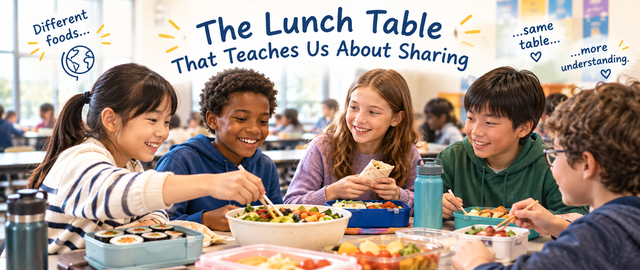
At noon, the school cafeteria gets loud. Trays clatter, chairs scrape, and kids look for a place to sit.
The lunch table is more than a place to eat. It is a place where food culture lives.
Food culture is the way we think about food: what we eat, how we eat it, and who we eat it with. You can learn a lot about a place just by watching its lunch table.
In some places, people pass around one big bowl and everyone takes a little. In other places, everyone has their own little box with different parts. In some families, you always say thank you before you eat. In others, you wait for the oldest person to start first.
At a lunch table, you figure out these rules without anyone giving you a lesson. You watch. You try. You might bring seaweed rice rolls one day, and your friend asks what they are. You explain. The next day, your friend brings tortillas and shows you how to fold them.
That is how food culture moves. It does not move only through books. It also moves when we share.
Some kids worry about bringing food that looks different. They think no one will like it. But the lunch table is actually the best place for different food. When you put food in the middle and let people try a bite of it, you are saying, “This is part of me. Do you want to try?”
Of course, not everyone will like every bite. That is okay. Food culture is not about liking everything. It is about showing respect. You can say, “Thank you for letting me try it,” even if it is not your favorite.
If every lunch table did this, just once a week, we would all know a little more about each other. We would not just know what food is yummy. We would know why it matters to someone.
So tomorrow, look at your lunch table. Who is sitting there? What is in front of you? Maybe pass something around. You might end up learning more than you expected.
語彙
- culture /ˈkʌltʃər/ 文化
- cafeteria /ˌkæfəˈtɪriə/ a large room where people eat in a school or workplace
- tortilla /tɔːrˈtiːjə/ トルティーヤ、薄い丸いパン
- respect /rɪˈspekt/ 尊敬、相手を大切に思う気持ち
- actually /ˈæktʃuəli/ in fact, really
- yummy /ˈjʌmi/ very good to eat, delicious
句動詞のリスト
- pass around:回す、みんなに回して分ける
- figure out:理解する、ルールなどを自然に掴む
- end up:結局〜になる、最終的に〜する
- look for:探す
構文のリスト
- What we eat, how we eat it, and who we eat it with:何を食べるか、どう食べるか、誰と食べるか(間接疑問文の並列)
- I wonder what we need, how we make it, and who will help us.
- Tell me where you go, how you get there, and who you meet.
- She explained what she bought, how she cooked it, and who she shared it with.
- You can learn a lot just by watching ~:〜をただ見るだけでたくさん学べる(by + 動名詞)
- You can learn a lot just by listening to people talk.
- You can learn a lot just by watching how birds fly.
- You can learn a lot just by reading the signs.
- If every ~ did this, we would …:もしすべての〜がこうしたら、私たちは…だろう(仮定法過去)
- If every school did this, we would have less trash.
- If every kid shared one book, we would all read more.
- If every family ate together, we would talk more.
- It is about ~ing:〜することについてのものだ(be about + 動名詞)
- This game is about working together.
- The book is about learning to be brave.
- Lunch is about sharing, not just eating.
コロケーションのリスト
- food culture:食文化
- Food culture is different in every town.
- Our class is learning about food culture in Japan.
- Food culture tells us a lot about history.
- pass around:回して分ける
- We pass around the big bowl of rice.
- Please pass around the photos so everyone can see.
- They pass around a basket of bread at dinner.
- show respect:敬意を示す、相手を尊重する
- We show respect by listening quietly.
- You can show respect even if you do not like the food.
- Saying thank you is one way to show respect.
- figure out the rules:ルールを理解する、掴む
- Kids figure out the rules by watching others.
- It took me a day to figure out the rules of the game.
- She figured out the rules without asking.
- try a bite:一口食べてみる
- Do you want to try a bite of my apple?
- He tried a bite and smiled.
- Let me try a bite before I say I don’t like it.
日本語対訳
分かち合いについて教えてくれる昼食のテーブル
お昼になると、学校のカフェテリアは騒がしくなります。トレーがガチャガチャと鳴り、椅子がきしみ、子どもたちは座る場所を探します。
昼食のテーブルは、食べる場所以上のものです。それは食文化が生きている場所なのです。
食文化とは、私たちが食べ物について考える方法のことです。何を食べるか、どう食べるか、誰と一緒に食べるか。昼食のテーブルを見ているだけで、その場所についてたくさん学ぶことができます。
ある場所では、人々は一つの大きなボウルを回し、みんなが少しずつ取ります。別の場所では、みんなが違うおかずの入った自分専用の小さな箱を持っています。ある家族では、食べる前に必ずありがとうと言います。別の家族では、一番年上の人が食べ始めるのを待ちます。
昼食のテーブルでは、誰かに授業をしてもらわなくても、こうしたルールを理解していきます。見ます。試してみます。ある日、海苔巻きを持って行くと、友達がそれは何かと尋ねます。あなたは説明します。次の日、友達はトルティーヤを持って来て、折り方を教えてくれます。
それが食文化が伝わっていく方法です。本の中で伝わるのではありません。分かち合うときに伝わるのです。
見た目が違う食べ物を持って行くことを心配する子もいます。誰も気に入ってくれないと思うのです。でも昼食のテーブルは、違う食べ物にとって実は最高の場所です。食べ物を真ん中に置いて、みんなに一口試させるとき、あなたは「これは私の一部だよ。食べてみる?」と言っているのです。
もちろん、誰もがすべての一口を好きになるわけではありません。それでいいのです。食文化はすべてを好きになることではありません。敬意を示すことなのです。「試させてくれてありがとう」と、たとえお気に入りではなくても言うことができます。
もしすべての昼食のテーブルが、週にたった一度だけでもこれをしたら、私たちはお互いについてもう少し知ることができるでしょう。何がおいしいかを知るだけではなく、なぜそれが誰かにとって大切なのかを知るようになるでしょう。
だから明日、あなたの昼食のテーブルを見てみてください。誰がそこに座っていますか。あなたの目の前には何がありますか。何かを回してみてはどうでしょう。予想以上に多くのことを学ぶことになるかもしれません。
制作について
本記事の英文・日本語訳・英語難易度の評価は、AIを活用して作成したものです。
内容の正確性を保証するものではありません。
AIによるチェックを行っていますが、論理的な矛盾・文脈の破綻などが含まれている可能性や、歴史的事実・科学的な正確性・一般常識などに合致しない事柄が含まれている可能性があります。あくまでも英文を読む練習用の素材として考えて下さい。
なお、難易度の評価は目安であり、CEFRや英検による公式な判定ではありません。