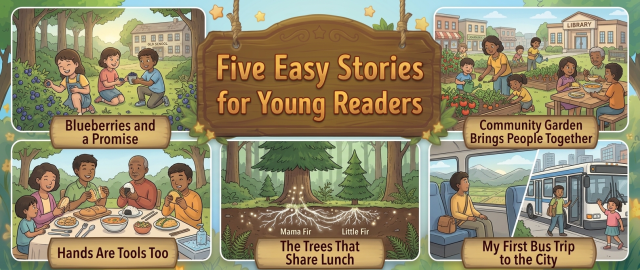
AIで生成した少しやさしい英文5話をまとめて掲載しています。
英文の難易度
CEFR:A1
英検:4級
語数:5話合計約1,533語
制作について
本記事の英文・日本語訳・英語難易度の評価は、AIを活用して作成したものです。
内容の正確性を保証するものではありません。
論理的な矛盾・文脈の破綻などが含まれている可能性や、歴史的事実・科学的な正確性・一般常識などに合致しない事柄が含まれている可能性があります。あくまでも英文を読む練習用の素材として考えて下さい。
「んっ?」と思うところがあっても、無視して読み続ける能力を獲得していただければ幸いです…
なお、難易度の評価は目安であり、CEFRや英検による公式な判定ではありません。
Blueberries and a Promise
英語本文:約363語
There was a girl who knew where the best blueberries grew.
Not in a store. In the woods behind the old school.
She found them one summer. Big bushes, many berries, sweet.
She told her friend. Her friend promised, “I will not tell anyone else.”
The friend kept the promise. Good.
Then another friend saw purple spots on the girl’s shirt. Asked where.
The girl did not want to tell. If many people know, the berries will be gone fast. Birds need some too.
But she did not want to lie. Lying feels bad.
So she said, “I picked them in the woods, but I promised not to tell the exact place.”
The second friend was mad. “You do not trust me,” she said.
The girl said, “It is not about trust. It is about the promise I already made. If I break my promise to the first friend, my promise means nothing.”
The second friend said, “But you can make a new promise to me too.”
The girl thought. If she tells the second friend, she breaks the first promise. Even if she makes a new promise, the first promise is broken.
A promise is like a jar. If the jar has a crack, it leaks. It cannot hold water again.
So she did not tell.
She did something else. She picked a small cup of berries and gave them to the second friend. She said, “Here are some berries, but the place stays secret.”
The second friend ate the berries. Sweet. Smiled. “Okay, the secret is safe,” she said.
Later, the three friends went together to the woods. The first friend said it was okay to show the place to the second friend if they all went together and picked only some.
They made a new promise together. Pick some, leave some for the birds and for next week.
The girl learned. A promise is not just words. A promise protects trust.
And blueberries taste better when a promise is kept.
One secret place, two promises, three friends picking, leaving some behind.
That is how the woods still have blueberries each summer.
Some places stay secret, but berries can be shared.
日本語対訳
ブルーベリーと約束
一番良いブルーベリーがどこに生えるか知っている女の子がいた。
店ではない。古い学校の裏の森の中だ。
ある夏に見つけた。大きな茂み、たくさんの実、甘い。
友達に教えた。友達は約束した。他の誰にも言わないよ、と。
友達は約束を守った。良いことだ。
それから別の友達が女の子のシャツに付いた紫色のしみを見つけた。どこで摘んだのかと聞いた。
女の子は教えたくなかった。多くの人が知ればベリーはすぐに無くなってしまう。鳥も少し必要だ。
だが嘘をつきたくはなかった。嘘をつくのは嫌な気分だ。
だから言った。森で摘んだの、でも正確な場所は言わないと約束したの、と。
二人目の友達は怒った。言った。私を信頼していないのね、と。
女の子は言った。信頼の問題じゃないの。すでにした約束の問題なの。最初の友達との約束を破れば私の約束は何の意味もなくなるの、と。
二人目の友達は言った。でも私にも新しい約束をすればいいじゃない、と。
女の子は考えた。もし二人目の友達に教えれば最初の約束を破ることになる。新しい約束をしても最初の約束は破られたままだ。
約束は瓶のようなものだ。もし瓶にひびがあれば漏れる。もう二度と水を保てない。
だから教えなかった。
別のことをした。小さなカップ一杯のベリーを摘んで二人目の友達に渡した。言った。ほらベリー、でも場所は秘密のままね、と。
二人目の友達はベリーを食べた。甘い。微笑んだ。分かった。秘密は守るよ、と言った。
後で三人の友達は一緒に森へ行った。最初の友達は皆で一緒に行って少しだけ摘むなら二人目の友達に場所を見せても良いと言った。
三人で一緒に新しい約束をした。少し摘んで、鳥のためと来週のために少し残すという約束だ。
女の子は学んだ。約束は単なる言葉ではない。約束は信頼を保つのだ。
そして約束が守られたときブルーベリーはよりおいしくなる。
一つの秘密の場所、二つの約束、三人の友達が摘み、少し残す。
森に毎年夏、ブルーベリーが実るのはそういうわけだ。
いくつかの場所は秘密のままだが、ベリーは分け合うことができるからだ。
Community Garden Brings People Together
英語本文:約268語
The small town of Greenfield in California has a new community garden. The garden opened last month and many people come to work there.
The garden is near the town library. It is not big, but it has many small plots. People can grow vegetables and flowers. The town made the garden for people who do not have a garden at home.
Mrs. Lopez is the woman who started the garden. She is sixty years old. She loves plants and wanted a place for neighbors to meet. She talked to the town and got help.
Now, twenty families work in the garden. Some families grow tomatoes and lettuce. Some grow carrots and beans. Some grow beautiful flowers. They get up early on Saturdays and go to the garden. They water the plants and pull the weeds.
Children also come to the garden. They learn how to plant seeds and how to grow food. Mr. Smith is a teacher. He brings his students to the garden every Friday. The students write about plants in their notebooks.
People share their vegetables with neighbors. If one family has many tomatoes, they give some to other families. Last week, they had a small party in the garden. They cooked soup with vegetables from the garden.
Mrs. Lopez says, “The garden helps people meet and talk. It makes our town warm.”
The garden is open every day from six in the morning to six in the evening. If you live in Greenfield, you can join. You do not need to pay a lot. You can grow your own food and meet new friends.
日本語対訳
共有菜園が人々をつなぐ
カリフォルニア州の小さな町グリーンフィールドに新しい共有菜園ができました。菜園は先月オープンし、多くの人が作業をしに来ています。
菜園は町の図書館の近くにあります。大きくはありませんが、小さな区画がたくさんあります。人々は野菜や花を育てることができます。町は家に庭がない人のために菜園を作りました。
ロペスさんは菜園を始めた女性です。六十歳です。植物が大好きで、近所の人が集まる場所が欲しいと思いました。町に相談して協力を得ました。
今では二十家族が菜園で働いています。トマトやレタスを育てる家族もいれば、ニンジンや豆を育てる家族もいます。美しい花を育てる家族もいます。土曜日の朝早く起きて菜園に行きます。植物に水をやり、雑草を取ります。
子どもたちも菜園に来ます。種の植え方や食べ物の育て方を学びます。スミスさんは先生です。毎週金曜日に生徒を菜園に連れてきます。生徒たちは植物についてノートに書きます。
人々は野菜を近所の人と分け合います。ある家族がたくさんのトマトを持っている時は、他の家族に少しあげます。先週、菜園で小さなパーティーを開きました。菜園の野菜でスープを作りました。
ロペスさんは言います。「菜園は人々が出会って話すのを助けてくれます。私たちの町を温かくしてくれます」
菜園は毎日朝六時から夕方六時まで開いています。グリーンフィールドに住んでいるなら参加できます。たくさんお金を払う必要はありません。自分の食べ物を育てて新しい友達に出会うことができます。
Hands Are Tools Too
英語本文:約265語
Some people think you must always eat with a fork.
But in many places, people eat with their hands. Is that bad? No. It can be good.
Think of bread. Fresh bread. Hot. Soft. You break it with your hands. You share it. One piece for you, one for me.
If you use a fork, bread falls. Hard to hold. Hands are better.
Think of rice balls. In Japan, people make rice balls with their hands. Hands press rice. Hands make it round. Warm rice sticks to your hands a little. That is okay. It shows hands made it.
Think of tacos. In Mexico, people eat tacos with their hands. You fold the tortilla. You hold it. Juice runs down. You catch it. A fork cannot fold it.
Hands tell you how hot the food is. A fork does not tell you. Hands feel warm. So you know, blow a little. Wait.
Hands also tell you how much to take. Small hand, small bite for kids. Big hand, big bite. Fair.
Of course, wash your hands first. Always. Soap and water. Then your hands are clean.
Some people say hands are dirty. But washed hands are clean. You can eat clean food with clean hands.
So forks are good. Hands are good too. Different foods like different tools.
Bread likes hands. Soup likes spoons. Tacos like hands. Noodles like chopsticks.
Good food culture is not one tool for all. Good food culture is the right tool for the food.
And sometimes the right tool is your hand. Right there at the end of your arm.
日本語対訳
手も道具だ
フォークで食べなければならないと考える人もいる。
でも多くの場所では手で食べる。それは悪いことだろうか。いや、良いことでもあるのだ。
パンを考えてみよう。焼きたてのパン。熱い。柔らかい。手で割る。分け合う。一つはあなたに、一つは私に。
フォークを使えばパンは落ちる。持ちにくい。手の方が良い。
おにぎりを考えてみよう。日本では手でおにぎりを作る。手が米を押す。手で丸くする。温かい米は少し手にくっつく。それで良いのだ。手で作ったことを示している。
タコスを考えてみよう。メキシコでは手でタコスを食べる。トルティーヤを折る。持つ。汁が流れ落ちる。受け止める。フォークでは折れない。
手は食べ物がどれくらい熱いか教えてくれる。フォークは教えてくれない。手は温かさを感じる。だから分かる、少し吹こう、待とう、と。
手はどれくらい取れば良いかも教えてくれる。小さな手は子どもには小さな一口。大きな手は大きな一口。公平だ。
もちろん最初に手を洗う。いつも。石鹸と水で。そうすれば手はきれいだ。
手は汚いと言う人もいる。でも洗った手はきれいだ。きれいな手で清潔な食べ物を食べることができる。
だからフォークは良い。手も良い。違う食べ物は違う道具を好むのだ。
パンは手が好きだ。スープはスプーンが好きだ。タコスは手が好きだ。麺は箸が好きだ。
良い食文化とは、すべての食べ物に同じ道具を使うことではない。良い食文化とは食べ物に合った正しい道具のことだ。
そして時には正しい道具はあなたの手なのだ。腕の先にすぐそこにある。
The Trees That Share Lunch
英語本文:約304語
In a quiet forest in Oregon, two trees stand close together. One is tall and old. One is short and young.
The old tree is called Mama Fir. The young tree is called Little Fir.
Mama Fir has deep roots. Little Fir’s roots are small and cannot reach far down. On hot days, Little Fir gets thirsty fast.
Under the ground, there is a secret net. It is made of tiny white threads. Scientists call it mycelium. It is like a phone line for trees. You cannot see it, but it is everywhere under the soil.
When Mama Fir makes extra sugar from the sun, she sends some down to her roots. The white threads pick it up and carry it over to Little Fir. Little Fir gets a little lunch.
One summer was very dry. It did not rain for many weeks. Little Fir was tired and dry. Mama Fir had more water deep down. She shared her water through the white threads. Little Fir felt better and stood up a little taller.
At night the forest is quiet, but under the ground the trees are busy. They pass along food, water, and even warnings. If bugs come to eat one tree, that tree can tell the others, “Make your leaves taste bad.” The other trees listen and do it.
Mama Fir and Little Fir cannot walk or talk like us. But they take care of each other every day. They share lunch through the little white threads that no one can see.
If you walk in the forest, put your hand on a big tree. Look at the tiny baby trees around it. They might be getting lunch from their mama, right under your feet. The forest is not just a lot of trees standing alone. It is a family that shares.
日本語対訳
お昼ごはんを分け合う木
オレゴンの静かな森に、2本の木が近くに並んで立っています。一本は背が高く古い木。一本は背が低く若い木です。
古い木はママ・モミと呼ばれています。若い木はチビ・モミと呼ばれています。
ママ・モミは深い根を持っています。チビ・モミの根は小さく、遠く下まで届きません。暑い日には、チビ・モミはすぐに喉が渇いてしまいます。
地面の下には秘密のネットがあります。小さな白い糸でできています。科学者たちはそれを菌糸体と呼びます。木のための電話線のようなものです。見ることはできませんが、土の下の至る所にあります。
ママ・モミが太陽から余分な糖を作ると、根へと送ります。白い糸がそれを拾い上げ、チビ・モミへ運んでいきます。チビ・モミはちょっとしたお昼ごはんをもらうのです。
ある夏はとても乾燥していました。何週間も雨が降りませんでした。チビ・モミは疲れて乾いていました。ママ・モミは深いところにもっと水を持っていました。彼女は白い糸を通して水を分け合いました。チビ・モミは気分が良くなり、少しだけ背筋を伸ばしました。
夜になると森は静かですが、地面の下では木々が忙しくしています。食べ物や水、さらには警告まで回して伝え合います。虫が一本の木の葉を食べに来たら、その木は他の木々に「葉っぱをまずくして」と伝えることができます。他の木々はそれを聞いてそうするのです。
ママ・モミとチビ・モミは私たちのように歩いたり話したりはできません。でも毎日互いに助け合っています。誰にも見えない小さな白い糸を通してお昼ごはんを分け合っているのです。
もし森を歩くことがあれば、大きな木に手を置いてみてください。その周りの小さな赤ちゃんの木を見てみてください。あなたの足元で、ちょうどお母さんからお昼ごはんをもらっているところかもしれません。森はただたくさんの木がバラバラに立っているだけではありません。分け合う家族なのです。
My First Bus Trip to the City
英語本文:約333語
Last month, I went to the big city for the first time in five years. I usually drive my old car, but this time I wanted to try taking a long-distance bus. My daughter bought the ticket for me on her phone.
On the morning of the trip, I got up at five thirty. I made coffee and put on my warm coat. My wife drove me to the small bus stop near our house. The bus was already there. It was a big white bus with a blue line on it.
I got on the bus and sat down near the front. The driver was very kind and said, “Good morning.” The seats were big and soft. I could put my seat back and use a small table. At six o’clock, the bus started to move out of town.
At first, I looked out the window. I saw mountains, rice fields, and many houses. After an hour, we got on the highway. The bus went fast, but it was very quiet. I turned off my phone and closed my eyes for a while. Then I woke up and looked around. Many people were sleeping. Some were reading books.
After two hours, we stopped at a big rest area. We could get off the bus for fifteen minutes. I bought some tea and a small rice ball. I called my wife and said, “The bus is very nice. I am having a good time.”
At ten thirty, we arrived in the city. The bus station was very big and busy. Many buses were coming and going. My daughter was waiting for me at the gate. She smiled and said, “How was your trip?” I said, “It was great. It was easy and cheap.”
Now, I like taking long-distance buses. I do not need to drive and look for parking. I can just sit down and look out the window, and enjoy the ride. Next time, I want to take my wife with me.
日本語対訳
初めての高速バスでの街への旅
先月、五年ぶりに大きな街に行きました。普段は古い車を運転しますが、今回は高速バスを試してみたかったのです。娘がスマホで切符を買ってくれました。
旅行の日の朝、五時半に起きました。コーヒーを入れて、暖かいコートを着ました。妻が家の近くの小さなバス停まで車で送ってくれました。バスはすでにそこにありました。青い線の入った大きな白いバスでした。
バスに乗り込み、前の方の席に座りました。運転手さんはとても親切で「おはようございます」と言いました。座席は大きくて柔らかかったです。座席を後ろに倒して、小さなテーブルを使うことができました。六時に、バスは町を出発しました。
最初は窓の外を見ていました。山や田んぼ、たくさんの家が見えました。一時間後、私たちは高速道路に入りました。バスは速く走りましたが、とても静かでした。携帯の電源を切って、しばらく目を閉じました。それから目が覚めて、周りを見回しました。多くの人が寝ていました。本を読んでいる人もいました。
二時間後、私たちは大きな休憩所に停まりました。十五分間バスから降りることができました。お茶と小さなおにぎりを買いました。妻に電話をかけて「バスはとても快適だよ。楽しい時間を過ごしているよ」と言いました。
十時半に、私たちは街に着きました。バスターミナルはとても大きくて賑やかでした。たくさんのバスが出たり入ったりしていました。娘がゲートで待っていてくれました。彼女は笑って「旅はどうだった?」と言いました。私は「とても良かったよ。簡単で安かった」と答えました。
今では、高速バスが好きです。運転したり駐車場を探したりする必要がありません。ただ座って、窓の外を見て、乗車を楽しむことができます。次回は妻も一緒に連れて行きたいです。