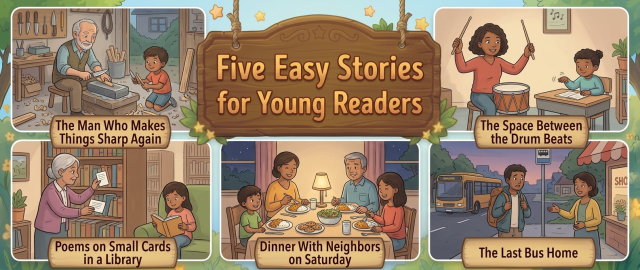
AIで生成した少しやさしい英文5話をまとめて掲載しています。
英文の難易度
CEFR:A1
英検:4級
語数:5話合計約1,534語
制作について
本記事の英文・日本語訳・英語難易度の評価は、AIを活用して作成したものです。
内容の正確性を保証するものではありません。
論理的な矛盾・文脈の破綻などが含まれている可能性や、歴史的事実・科学的な正確性・一般常識などに合致しない事柄が含まれている可能性があります。あくまでも英文を読む練習用の素材として考えて下さい。
「んっ?」と思うところがあっても、無視して読み続ける能力を獲得していただければ幸いです…
なお、難易度の評価は目安であり、CEFRや英検による公式な判定ではありません。
The Man Who Makes Things Sharp Again
英語本文:約254語
There is a man who sharpens things.
Not many people see him. He works in a small shop. No big sign.
People bring him old knives. Dull knives. He makes them sharp again.
He brings his stone. Gray stone. He puts water on it. Then he moves the knife. Slow. Back and forth. Shhh, shhh.
After a while, the knife is sharp. It can cut paper. Thin paper.
Kids bring him pencils. Not knives. Dull pencils.
He laughs. He takes a small knife. He sharpens the pencil. Not with a plastic sharpener. With a knife.
He turns the pencil. Small cuts. Wood falls off. Like curls. The point comes out. Long and sharp.
He gives it back. The kid draws. Dark line. Good.
No one writes about him in the paper. No one knows his name far away.
But people in town know. If your scissors are dull, go to him. If your pencil is dull, go to him.
He does not make new things. He makes old things work again.
A sharp knife cuts better. A sharp pencil draws better. Old things can be good again.
He sits in his small shop. Stone and water and small curls of wood on the floor.
He sharpens. Shhh, shhh. All day.
We need people who make new things. We also need people who make old things sharp again.
That is his work. Quiet work. But important.
Next time your pencil is dull, think of him. A sharp point is not magic. Someone made it sharp.
日本語対訳
物をまた鋭くする男
物を研ぐ男がいる。
あまり多くの人は彼を見ない。小さな店で働いている。大きな看板もない。
人々は古いナイフを持って来る。切れないナイフだ。彼はまた切れるようにする。
彼は石を持って来る。灰色の石だ。水をかける。それからナイフを動かす。ゆっくり。前後に。シュッシュッ。
しばらくするとナイフは鋭くなる。紙を切れる。薄い紙を。
子どもたちは鉛筆を持って来る。ナイフではない。丸くなった鉛筆だ。
彼は笑う。小さなナイフを手に取る。鉛筆を削る。プラスチックの鉛筆削りではなく。ナイフでだ。
鉛筆を回す。小さく削る。木の削りくずが落ちる。くるくると丸まっている。芯先が出て来る。長くて鋭い。
返してあげる。子どもは絵を描く。濃い線。良い。
誰も新聞に彼のことを書かない。遠くでは誰も彼の名前を知らない。
でも町の人々は知っている。ハサミが切れなくなったら彼のところへ行きなさい。鉛筆が丸くなったら彼のところへ行きなさい、と。
彼は新しい物を作らない。古い物をまた使えるようにするのだ。
鋭いナイフはより良く切れる。鋭い鉛筆はより良く描ける。古い物はまた良い物になれる。
彼は小さな店に座っている。石と水と床に落ちた小さな木のカール。
彼は研ぐ。シュッシュッ。一日中。
私たちには新しい物を作る人が必要だ。古い物をまた鋭くする人も必要なのだ。
それが彼の仕事だ。静かな仕事。でも大切だ。
次に鉛筆が丸くなったら彼のことを思い出してほしい。鋭い先は魔法ではない。誰かが鋭くしたのだ。
The Space Between the Drum Beats
英語本文:約367語
When you listen to a drum, you hear BUM! BUM! But you also hear something else. You hear the quiet between the BUMs. That quiet is part of the music, too.
Many kids think music is only sound. It is not. Music is sound and no sound, put together. The no-sound parts are called rests. A rest is when you do not play. You wait.
Think about clapping. If you clap non-stop — clapclapclapclap — it feels messy. No one knows when to join in. But if you clap and then leave a little space — clap … clap … clap — everyone can follow. The space tells your hands when to move.
Drummers know this very well. A drummer can play loud and fast. But a good drummer also knows how to hold back. She hits the drum, then she lifts up her sticks and waits. In that wait, your heart beats once. Your foot taps. Your brain says, “Here comes the next one!” The wait makes the next hit feel bigger.
In many kinds of music, the rests come from the body. A trumpet player must stop to breathe. That stop is a rest. A singer must stop to breathe. That stop is a rest, too. Long ago, people sang while they worked. They sang when they pulled a rope. They had to stop to pull. So the song had space in it. The space and the pull worked together.
You can try this at home. Tap your desk. Tap, tap, — now do not tap. Just listen to the quiet for one second. Then tap again. That quiet is not empty. It is full of waiting. It is full of the next sound that is about to come up.
Some old drums in West Africa even use the quiet to talk. A short sound means one thing. A long quiet means another thing. People who know the drum language can hear both the sound and the quiet and figure out the message.
So next time you hear a song, do not just listen to the notes. Listen to the little breaks, too. Pick up the quiet between the beats. That quiet is where your own clap can fit in.
日本語対訳
太鼓の音と音の間の静けさ
太鼓の音を聴くと、ドン!ドン!という音が聞こえます。でもそれだけではありません。ドンとドンの間の静けさも聞こえるのです。その静けさも音楽の一部なのです。
多くの子どもたちは、音楽は音だけだと思っています。違います。音楽は音と無音を組み合わせたものです。無音の部分は休符と呼ばれます。休符は、演奏しないときのことです。待つのです。
手を叩くことを考えてみましょう。もし休みなく叩き続けたら——パチパチパチパチ——ごちゃごちゃした感じがします。誰もいつ入ればいいのかわかりません。でも少し間を置いて——パチ……パチ……パチ——と叩けば、みんながついてこられます。その間が、手をいつ動かせばいいかを教えてくれるのです。
ドラマーたちはこのことをよく知っています。ドラマーは大きく速く叩くことができます。でも上手なドラマーは、どう抑えるかも知っています。太鼓を叩いたら、スティックを持ち上げて待ちます。その待ち時間の間に、あなたの心臓は一度ドキッとします。足がトントンとリズムを取ります。脳が「次が来るぞ!」と言うのです。その待ちが、次の音をもっと大きく感じさせるのです。
多くの音楽では、休符は体から来ます。トランペット奏者は息をするために止まらなければなりません。その止まることが休符です。歌手も息をするために止まらなければなりません。それも休符です。昔、人々は働きながら歌っていました。ロープを引っ張りながら歌っていました。引っ張るために止まらなければなりませんでした。だから歌には空間があったのです。その空間と引っ張る動作が一緒に働いていたのです。
家で試してみることができます。机を叩いてみましょう。トントン、——さあ、今度は叩かないでください。ただ一秒間、静けさに耳を澄ましてください。それからもう一度叩きます。その静けさは空っぽではありません。待つ気持ちでいっぱいです。これからやって来る次の音でいっぱいなのです。
西アフリカのいくつかの古い太鼓は、その静けさを使っておしゃべりさえします。短い音はある一つの意味を、長い静けさは別の意味を表します。太鼓の言葉を知っている人々は、音と静けさの両方を聞き取って、メッセージを解読することができるのです。
だから今度歌を聴くときは、音符だけを聴かないでください。小さな休みにも耳を澄ましてみてください。ビートの間の静けさを拾い上げてみてください。その静けさは、あなた自身の手拍子がぴったり収まる場所なのです。
Poems on Small Cards in a Library
英語本文:約299語
In a small town in Wales, there is a small library. People in town love the library. There is something special in the library. There are small cards with short poems inside many books.
Mrs. Evans is the woman who writes the poems. She is seventy years old. She loves reading and writing. She worked as a teacher for thirty years. She taught English to young children.
Five years ago, she started to write short poems. Each poem is very short, only four lines. She writes about birds, the sea, trees, and everyday life. She writes the poems on small white cards with a black pen.
Every Monday, she goes to the library. She puts her small cards inside different books. She does not tell people where she puts them. People find the cards when they open a book. They feel happy and surprised.
One day, a young girl found a card with a poem about a small bird. The girl liked the poem very much and started to write her own poems. Now she writes poems every week and shows them to Mrs. Evans at the library.
Many people in town talk about the poems. Some people keep the small cards at home. Some people write a small thank you note and leave it at the library for Mrs. Evans.
Mrs. Evans says, “I want people to enjoy reading more. A small poem can make a day happy.”
Last month, I visited the library. I opened a book about the sea and found a small card. The poem was about waves and wind. I felt calm and happy when I read it.
If you have a library near your house, you can look for small surprises. You can also write a short poem and share it with someone.
日本語対訳
図書館の中の小さなカードの詩
ウェールズの小さな町に小さな図書館があります。町の人々はその図書館が大好きです。図書館には特別なものがあります。たくさんの本の中に短い詩が書かれた小さなカードが入っているのです。
詩を書いているのはエバンズさんという女性です。七十歳です。読むことと書くことが大好きです。三十年間教師として働き、小さな子どもたちに英語を教えていました。
五年前、短い詩を書き始めました。どの詩もとても短く、四行だけです。鳥や海、木々、日常生活について書きます。白い小さなカードに黒いペンで詩を書きます。
毎週月曜日に図書館に行きます。いろいろな本の中に小さなカードを入れます。どこに入れたかは誰にも言いません。人々は本を開けた時にカードを見つけます。嬉しくて驚いた気持ちになります。
ある日、若い女の子が小鳥についての詩が書かれたカードを見つけました。女の子はその詩がとても気に入り、自分でも詩を書き始めました。今では毎週詩を書いて図書館でエバンズさんに見せています。
町の多くの人がその詩について話します。小さなカードを家に取っておく人もいれば、小さなお礼の手紙を書いて図書館に置いていく人もいます。
エバンズさんは言います。「もっと読書を楽しんでほしいです。小さな詩が一日を幸せにすることができます」
先月、私は図書館を訪れました。海についての本を開けると小さなカードを見つけました。波と風についての詩でした。読んだ時、穏やかで幸せな気持ちになりました。
もし家の近くに図書館があるなら、小さな驚きを探してみてください。短い詩を書いて誰かと分かち合うこともできます。
Dinner With Neighbors on Saturday
英語本文:約311語
Last Saturday evening, our new neighbors came to our house for dinner. They moved in next door two months ago. They are the Johnson family. Mr. Johnson works at the hospital and Mrs. Johnson teaches English at a high school. They have one son, Tom, who is ten years old.
I was a little nervous before they came. I cleaned the living room and put flowers on the table. My wife made curry rice and a big salad. I went to the store and bought some juice and a small cake.
At six o’clock, they knocked on the door. Tom was holding a small bag. He said, “This is for you.” In the bag, there were cookies that Mrs. Johnson made. We sat down at the table and started to eat.
At first, it was a little quiet. But Tom started to talk about his school. He said his new school is big and he has many friends. Mrs. Johnson asked my wife about good shops in town. Mr. Johnson and I talked about baseball. We both like the same team. We got excited and talked a lot about last week’s game.
After dinner, we turned off the big light and turned on a small lamp. We drank tea and ate the cookies and the cake. Tom showed us pictures of his old town on his mother’s phone. He said he misses his old friends, but he likes our town too.
They went home at nine o’clock. Tom said, “Thank you for dinner. It was very fun.” Mrs. Johnson said, “Let’s get together again next month.”
Now we often say hello when we meet outside. Sometimes Tom comes over and plays in our garden. Having dinner together was a small thing, but it helped us become good neighbors. If new people move in near you, try to invite them for dinner.
日本語対訳
土曜日の隣人との夕食
先週の土曜の夜、新しい隣人たちが夕食のために私たちの家に来ました。彼らは二か月前に隣に引っ越してきたのです。ジョンソンさん一家といいます。ジョンソンさんは病院で働いていて、奥さんは高校で英語を教えています。一人息子のトムは十歳です。
彼らが来る前、私は少し緊張していました。リビングを掃除して、テーブルに花を置きました。妻はカレーライスと大きなサラダを作りました。私は店に行ってジュースと小さなケーキを買いました。
六時に、彼らはドアをノックしました。トムは小さな袋を持っていました。「これはあなたたちへのプレゼントです」と言いました。袋の中にはジョンソンさんが作ったクッキーが入っていました。私たちはテーブルに座って食べ始めました。
最初は少し静かでした。でもトムが学校のことを話し始めました。新しい学校は大きくて友達がたくさんいるそうです。ジョンソンさんは妻に町の良い店について尋ねました。ジョンソンさんと私は野球について話しました。私たちは同じチームが好きなのです。興奮して先週の試合についてたくさん話しました。
夕食の後、部屋の明かりを消して小さなランプをつけました。お茶を飲んで、クッキーとケーキを食べました。トムはお母さんのスマホで前の町の写真を見せてくれました。前の町の友達が恋しいけれど、私たちの町も気に入っていると言いました。
彼らは九時に帰りました。トムは「夕食をありがとう。とても楽しかったです」と言いました。ジョンソンさんは「来月また集まりましょう」と言いました。
今では外で会うとよく挨拶をします。時々トムがやって来て庭で遊びます。一緒に夕食を食べることは小さなことでしたが、良い隣人になる助けになりました。もし近くに新しい人が引っ越してきたら、夕食に招待してみてください。
The Last Bus Home
英語本文:約303語
Last Saturday, I went to a small town to visit an old friend. We had lunch at a cafe and walked around the town. There were many small shops, and I bought some bread to take home. We talked for hours, so I did not notice how late it was.
When I left my friend’s house, it was already dark. I walked to the bus stop and looked at the bus times. There was only one bus left that could take me to the train station. It would come in ten minutes. I sat down and checked my phone, but the battery was almost dead.
After a few minutes, I heard a bus coming. I stood up and looked at the road, but the bus went past me. I had been waiting at the wrong stop! I felt worried because I did not know the town very well. I looked around and saw a woman near a small shop.
“Excuse me,” I said. “Where can I catch the bus to the train station?”
She smiled and pointed down the road. “You need to go to the next stop. It’s just around the corner.”
I thanked her and hurried there. When I got to the stop, I saw the bus coming toward me. I waved my hand, and the driver stopped. I got on and found a seat near the window. Soon, we arrived at the train station, and I was able to catch the last train home.
On the train, I felt much better. I was glad that I had asked for help instead of just standing there and worrying. Since that day, I have checked bus stops more carefully. I also try to keep my phone charged before I leave home. A little care can save a lot of trouble when you travel.
日本語対訳
帰宅するための最終バス
先週の土曜日、私は昔からの友人を訪ねるために小さな町へ行きました。私たちはカフェで昼食を取り、町を歩いて回りました。小さな店がたくさんあり、私は家に持ち帰るパンをいくつか買いました。何時間も話していたので、すっかり遅い時間になっていることに気づきませんでした。
友人の家を出たとき、外はすでに暗くなっていました。私はバス停まで歩き、バスの時刻を確認しました。駅まで行けるバスは、あと一本しかありませんでした。そのバスは10分後に来る予定でした。私は座ってスマートフォンを確認しましたが、バッテリーがほとんど切れかけていました。
数分後、バスが近づいてくる音が聞こえました。私は立ち上がって道路を見ましたが、バスは私の前を通り過ぎてしまいました。間違ったバス停で待っていたのです! その町のことをよく知らなかったので、不安になりました。周りを見回すと、小さな店の近くに女性がいるのが見えました。
「すみません」と私は言いました。「駅行きのバスにはどこから乗れますか?」
女性は笑顔で道路の先を指さしました。「次のバス停ですよ。角を曲がったすぐ先です」
私はお礼を言い、急いでそこへ向かいました。バス停に着くと、ちょうどバスがこちらへ向かってくるのが見えました。私は手を振り、運転手がバスを止めてくれました。乗車して窓の近くの席を見つけました。まもなく駅に到着し、私は最終列車に乗って家に帰ることができました。
電車の中で、私はすっかり安心しました。ただそこに立って心配し続けるのではなく、人に助けを求めてよかったと思いました。それ以来、バス停を以前より注意深く確認するようになりました。家を出る前に、スマートフォンを充電しておくことも心がけています。旅行では、少し気をつけるだけで多くの面倒を避けられることがあります。