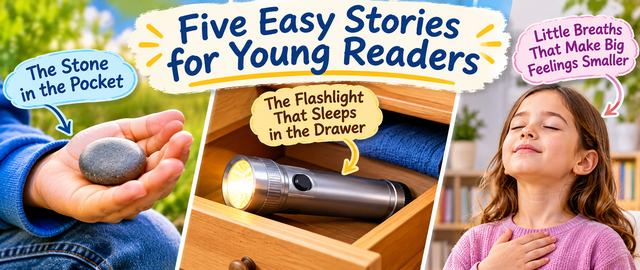
AIで生成したやさしい英文5話をまとめて掲載しています。
英文の難易度
CEFR:Pre-A1
英検:5級
語数:5話合計約1,367語
制作について
本記事の英文・日本語訳・英語難易度の評価は、AIを活用して作成したものです。
内容の正確性を保証するものではありません。
論理的な矛盾・文脈の破綻などが含まれている可能性や、歴史的事実・科学的な正確性・一般常識などに合致しない事柄が含まれている可能性があります。あくまでも英文を読む練習用の素材として考えて下さい。
「んっ?」と思うところがあっても、無視して読み続ける能力を獲得していただければ幸いです…
なお、難易度の評価は目安であり、CEFRや英検による公式な判定ではありません。
The Stone in the Pocket
英語本文:約275語
Some people keep a small stone in their pocket. Not for fun. Not for money. Just to hold.
It is smooth. It fits in the hand. Like a little egg, but hard.
When you feel a little nervous, you can put your hand in your pocket. You do not take the stone out. You just hold it.
You rub it with your thumb. Round and round.
Why does it help?
When your brain feels busy, your hand wants to do something. It wants to pick at your shirt. It wants to tap the table. It wants to pull your hair.
If you give your hand a job, your brain feels calmer. The hand has something to hold on to. So the brain can think more slowly.
The stone is not magic. It is just a stone from outside. From a river or a road.
But because you hold it many times, it learns your hand. It gets warm. It gets smoother.
Some people keep it for a day. Some people keep it for a year. Some people lose it and find a new one. That is okay too.
You do not need a special stone. You can pick one up. Wash it. Dry it. Put it in your pocket.
Then, when you stand in a line, or sit in a big room, or wait for your turn, you can hold on to it.
No one sees it. No one needs to know.
Your thumb goes round and round. The stone gets warmer and warmer.
And you feel a little more ready. A little more here.
The stone stays in your pocket. Quiet. Ready to help.
日本語対訳
ポケットの中の石
人によってはポケットの中に小さな石を入れておきます。遊ぶためではありません。お金のためでもありません。ただ持つためです。
それはすべすべしています。手の中に収まります。小さな卵のようですが、硬いのです。
少し緊張したとき、ポケットに手を入れることができます。石を取り出すのではありません。ただ持つだけです。
親指でこすります。くるくる、くるくる。
なぜ役に立つのでしょう?
脳が忙しく感じるとき、手は何かしたくなります。シャツをつまみたくなります。テーブルをトントンしたくなります。髪を引っ張りたくなります。
手に仕事を与えれば、脳はもっと落ち着いたように感じます。手には握りしめるものがあります。だから脳はもっとゆっくり考えることができます。
石は魔法ではありません。ただ外から来た石です。川や道から。
でも何度も持つので、あなたの手を覚えます。温かくなります。よりすべすべになります。
一日だけ持つ人もいます。一年持つ人もいます。なくして新しいのを見つける人もいます。それも大丈夫です。
特別な石は必要ありません。一つ拾い上げることができます。洗って。乾かして。ポケットに入れます。
それから、列に並んだり、大きな部屋に座ったり、順番を待ったりするとき、それを握りしめることができます。
誰にも見えません。誰も知る必要はありません。
親指はくるくる回ります。石はどんどん温かくなります。
そしてあなたは少しだけもっと準備ができたように感じます。少しだけもっとここにいるように。
石はポケットの中にあります。静かに。助ける準備をして。
The Flashlight That Sleeps in the Drawer
英語本文:約264語
In the kitchen, there is a drawer. Inside, there is a flashlight.
It does not get used every day. It sleeps in the drawer.
The flashlight is small. Silver. With a big button.
Why do we keep a flashlight in the drawer?
Sometimes, lights go out. Wind blows. Rain falls. A big storm comes. The power goes off. Click. Dark house.
When it is dark, you cannot see your toys. You cannot see the stairs. You cannot see Mom’s face.
But if you have a flashlight, you can see a little circle of light.
You open the drawer. You take out the flashlight. You push the button. Click! Light!
Now you can see the stairs. One, two, three. Now you can see your toys. Now you can see Mom. She smiles in the little circle.
The flashlight does not need power from the wall. It has its own power inside. Little batteries.
That is why it sleeps in the drawer. It waits for the dark day.
Every few months, Mom checks it. She pushes the button. Does it still shine? Yes. Good. She puts it back. Sleep again.
Some people keep water in the drawer too. And a little radio.
But the flashlight is the star. Because dark is scary, and light helps.
When power comes back, click, bright house again. You turn off the flashlight. You put it back in the drawer.
“Thank you,” you say. “Go back to sleep.”
The flashlight sleeps again. Quiet. Silver. Ready for next time.
And you know where it is. In the kitchen. In the drawer. Waiting.
日本語対訳
引き出しの中で眠る懐中電灯
台所に引き出しがあります。中に懐中電灯があります。
毎日使われるわけではありません。引き出しの中で眠っています。
懐中電灯は小さいです。銀色。大きなボタンが付いています。
なぜ引き出しに懐中電灯を入れておくのでしょう?
時々、明かりが消えます。風が吹きます。雨が降ります。大きな嵐が来ます。電力が止まります。パチッ。暗い家。
暗いと、おもちゃが見えません。階段が見えません。ママの顔が見えません。
でも懐中電灯があれば、小さな光の輪が見えます。
引き出しを開けます。懐中電灯を取り出します。ボタンを押します。カチッ!光!
今、階段が見えます。一つ、二つ、三つ。今、おもちゃが見えます。今、ママが見えます。彼女は小さな輪の中で微笑みます。
懐中電灯は壁からの電力を必要としません。中に自分自身の電力を持っています。小さな電池です。
だから引き出しの中で眠っています。暗い日のために待っているのです。
数ヶ月ごとに、ママはそれをチェックします。ボタンを押します。まだ光りますか?はい。良い。戻します。また眠ります。
水を引き出しに入れておく人もいます。そして小さなラジオも。
でも懐中電灯が主役です。なぜなら暗闇は怖くて、光は助けになるからです。
電力が戻ってくると、パチッ、また明るい家。懐中電灯を消します。引き出しに戻します。
「ありがとう」とあなたは言います。「また眠ってね」
懐中電灯はまた眠ります。静かに。銀色に。次の準備をして。
そしてあなたはそれがどこにあるか知っています。台所に。引き出しの中に。待っています。
Little Breaths That Make Big Feelings Smaller
英語本文:約262語
Some feelings are big. Your chest feels tight. Your hands make fists. You want to shout. That is okay. Everyone has big feelings.
When a big feeling comes, you can try little breaths.
Breathe in through your nose. Smell the flowers. One, two, three. Now breathe out through your mouth. Blow out the candles. One, two, three, four. Do it again. In, two, three. Out, two, three, four.
You can put your hand on your chest. Feel it go up and down. Up like a balloon filling. Down like a balloon going soft. Up, down. Up, down. Slow and soft.
Big feelings are like a storm. They come loud and fast. Little breaths are like wind that helps the storm move away. You still feel it, but it gets smaller. You can think again.
You can also take a little break. Get a drink of water. Look out the window. Count three blue things. One blue cup, one blue book, one blue shirt. Now your brain has some space.
Later you can talk. You can say, “I felt mad because my tower fell,” or “I felt sad because I wanted a turn.” Talking helps too. But first, little breaths.
Tonight before sleep, try it. In through your nose, out through your mouth. Your body feels soft. Your heart feels calm. Big day, little breaths, and you are ready for a good night.
You can do it anytime. At school, at home, on the bus. Little breaths go with you. They make big feelings smaller, so you can feel better and try again.
日本語対訳
大きな気持ちを小さくする小さな呼吸
気持ちが大きくなることがあります。胸がきゅっと苦しくなります。手はグーになります。叫びたくなります。それで大丈夫。誰にでも大きな気持ちになる時はあります。
大きな気持ちが来たら、小さな呼吸を試してみましょう。
鼻から息を吸います。お花の香りをかぐように。一、二、三。次は口から息を吐きます。ろうそくを吹き消すように。一、二、三、四。もう一度やってみましょう。吸って、二、三。吐いて、二、三、四。
手を胸の上に置いてもいいですよ。上がったり下がったりするのを感じてみます。風船がふくらむように上がります。風船がやわらかくしぼむように下がります。上、下。上、下。ゆっくり、やわらかく。
大きな気持ちは嵐のようです。大きくて速くやって来ます。小さな呼吸は、嵐が過ぎていくのを助ける風のようです。まだ感じてはいるけれど、小さくなります。もう一度考えられるようになります。
少し休憩を取ることもできます。水を一口飲みます。窓の外を見ます。青いものを三つ数えます。青いコップ一つ、青い本一冊、青いシャツ一枚。すると頭の中に少し余裕ができます。
あとでお話しできます。「タワーが倒れたから怒った気持ちになった」と言えます。あるいは「順番が来なくて悲しかった」とも。お話しすることも助けになります。でもまずは小さな呼吸。
今夜寝る前にやってみましょう。鼻から吸って、口から吐きます。体がやわらかく感じます。心が落ち着きます。大きな一日、小さな呼吸、そしておやすみの準備ができました。
いつでもできます。学校でも、家でも、バスの中でも。小さな呼吸はあなたと一緒に行きます。大きな気持ちを小さくしてくれるから、気分が良くなって、またがんばれます。
Leaving Spaces Makes Words Breathe
英語本文:約289語
Look at a page with no spaces. likethisitisallstucktogether. Can you read it? It is hard. Your eyes get tired.
Now look at this: like this it is all spaced out. Ah, much better. Your eyes can rest.
Spaces are small, but they do a big job. They say, “One word ends. A new word starts here.” They are like little breaths for your eyes.
When you write, leave a finger space between words. Put your pinky finger down after a word, then start the next word. That finger space is just right for most writing. Some people use a popcorn space. As big as a popcorn pop! Either way, give words room.
Why does it help? Think about cars on a road. If all the cars are bumper to bumper, they cannot move. If there is space between cars, they can go. Words are the same. If they are stuck, your brain gets stuck. If they have space, your brain can drive along.
You can try it. Write your name. Now write it again with big spaces: M A R Y. It looks funny, right? Too much space is also hard. The best space is not too big, not too small. Just enough for a finger.
When you read, you can use spaces too. Put your finger under each word as you read. Move it, word, space, word, space. It helps your eyes not jump ahead.
Spaces do not make a sound. You cannot hear them. But they help you hear the words in your head. One word at a time, like steps on stairs.
Tonight, look at a book. Find the spaces. They are quiet helpers. They let words breathe, so you can breathe too while you read.
日本語対訳
スペースを空けると言葉が呼吸する
スペースのないページを見てください。こんなかんじですべてくっついている。読めますか?難しいです。目が疲れてしまいます。
ではこれを見てください。こんなふうに ぜんぶ はなれて いる。ああ、ずっと良いです。目が休めます。
スペースは小さいですが、大きな仕事をしています。「一つの単語はここで終わり、新しい単語はここから始まるよ」と教えてくれます。目のための小さな呼吸のようなものです。
書く時は、単語の間に指一本分のスペースを空けてください。小指を単語の後に置いてから、次の単語を始めます。その指一本分のスペースが、たいていの書き方ではちょうど良いのです。ポップコーン一粒分のスペースを使う人もいます。ポップコーンがポンとはじけるくらいの大きさ!どちらにしても、言葉に余裕を持たせましょう。
なぜ役に立つのでしょう?道路の車を考えてみてください。もしすべての車がバンパーとバンパーがくっつくほど詰まっていたら、動けません。車の間にスペースがあれば、進むことができます。言葉も同じです。くっついていたら、脳が詰まってしまいます。スペースがあれば、脳はドライブするように進んでいけます。
やってみましょう。あなたの名前を書いてみてください。次に大きなスペースを空けてもう一度書きます。M A R Y。おかしく見えますよね?スペースが大きすぎるのもまた難しいのです。一番良いスペースは、大きすぎず、小さすぎず。指一本分くらいがちょうど良いのです。
読む時にもスペースを使えます。読む時に指をそれぞれの単語の下に置きます。動かします、単語、スペース、単語、スペース。目が先へ飛んでいかないように助けてくれます。
スペースは音を立てません。聞こえません。でも頭の中で言葉が聞こえるように助けてくれます。一度に一語ずつ、階段の段のように。
今夜、本を見てみましょう。スペースを見つけてください。彼らは静かな助け手です。言葉に呼吸をさせてくれるので、あなたも読みながら呼吸ができるのです。
Holding the Door Lets Kindness Walk Through
英語本文:約277語
The door is heavy. You push it open. Behind you someone has their hands full. Books, a water bottle, a big bag. What can you do?
You can hold the door. You hold it open and say, “Come on through.”
That small move does a big thing. The person smiles. “Thank you,” they say. You say, “You are welcome.” Kindness just walked through the door.
Holding the door is easy. You do not need to be strong. You just need to pause for three seconds. One, two, three. That pause says, “I see you. I will wait a little.”
Sometimes people are in a hurry. They run by and forget to say thank you. That is okay. You still did the kind thing. Kindness does not need a thank you to be kind.
Other times, people hold the door for you. Then you feel warm inside. You feel seen. You can say thank you loud and clear. That thank you makes them feel warm too. Kindness goes back and forth, like a ball.
You can hold more than doors. You can hold the elevator. You can hold a spot in line at the drinking fountain. You can hold a book for a friend while she ties her shoe. All of those are door moments.
Try it today. At school, at the store, at home. When you get to a door, look behind you. Is someone close? Hold it. Watch what happens. Most people smile. Some say thank you. Some hold the next door for the next person. Your three seconds can start a long chain.
One door, one pause, one smile. Kindness walks through, and it keeps walking.
日本語対訳
ドアを押さえると親切が通り抜ける
ドアは重いです。あなたはそれを押して開けます。後ろには両手がふさがった人がいます。本、水筒、大きなバッグ。あなたは何ができますか?
ドアを押さえておくことができます。開けたままにして「どうぞ通って」と言います。
その小さな動きが大きなことをします。その人は微笑みます。「ありがとう」と言います。あなたは「どういたしまして」と言います。親切がドアを通り抜けたところです。
ドアを押さえるのは簡単です。強くなる必要はありません。三秒間止まるだけでいいのです。一、二、三。その一瞬の停止が「あなたが見えています。少し待ちますよ」と伝えます。
時々、人は急いでいます。走り去って、ありがとうと言い忘れます。それは大丈夫です。あなたはそれでも親切なことをしたのです。親切は、ありがとうがなくても親切です。
他の時には、誰かがあなたのためにドアを押さえてくれます。すると心の中が温かく感じます。自分が見られていると感じます。大きくはっきりとありがとうと言えます。そのありがとうが相手も温かい気持ちにさせます。親切はボールのように行ったり来たりします。
ドア以外にも押さえられるものがあります。エレベーターを待たせることができます。飲み水場の列で場所を取っておくことができます。友達が靴ひもを結んでいる間、本を持ってあげることもできます。それらすべてがドアの瞬間です。
今日やってみましょう。学校で、お店で、家で。ドアのところに来たら、後ろを見てください。近くに誰かいますか?押さえておきましょう。何が起こるか見てください。たいていの人は微笑みます。ありがとうと言う人もいます。次のドアを次の人のために押さえてくれる人もいます。あなたの三秒が長い連鎖を始められるのです。
一つのドア、一つの立ち止まり、一つの微笑み。親切は通り抜け、そして歩き続けます。