テーマ:食文化
作品形式:エッセイ
対象:英検4級を目指す学習者
英語本文:約375語
英語難易度の評価(推定)
CEFRレベル:A1〜A2
語彙の難易度:A1中心、一部A2、一部専門語
文法の難易度:A1〜A2
抽象的な内容の理解:A2
English Text
When you eat dinner, you pick up your food. You may pick up a fork. You may pick up chopsticks. In some places, people do not pick up a fork at all. They pick up a piece of soft bread. The bread is the spoon.
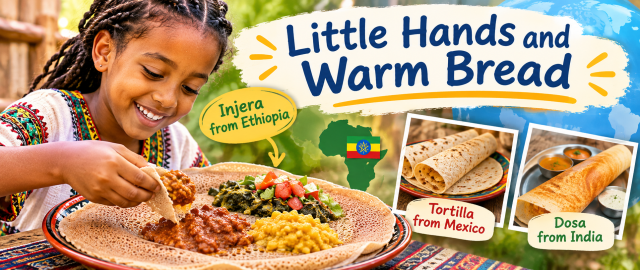
One kind of bread is called injera. It comes from a country called Ethiopia, in East Africa. Injera is big and round. It is as big as a plate. It is soft, a little sour, and full of tiny holes. It is made from a very small grain called teff. Teff is so small you can hold a lot of it in one hand.
People start making injera a day or more before they eat it. They mix teff flour and water and let it ferment. Little bubbles come up. That is how it gets its soft, spongy feel. Then they cook it on a big hot pan. It does not get brown like toast. It stays light in color.
At dinner time, they put the big injera on a plate. They put small piles of food on top. The food may be lentils, greens, or chicken stew. Then everyone sits down together around one big plate. Everyone shares one big plate.
You wash your hands first. Then you tear off a small piece of injera with your right hand. You fold it a little. You scoop up some stew with it. Then you put the whole thing in your mouth. The bread, the stew, your hand — they all work together. You do not need a spoon at all.
This is not the only place where bread is a spoon. In Mexico, people tear off a piece of tortilla to scoop up beans. In South India, people tear off a piece of dosa to pick up curry.
When you eat with your hand and bread, you have to sit close. You have to share. You have to look at the same big plate and talk. The bread is not just food. It brings people together.
Next time you have a piece of soft flatbread, you can try it. Tear off a little piece. Scoop up some peas or carrots. See how it feels to let the bread be the spoon.
語彙
- spongy /ˈspʌndʒi/ soft and full of small holes like a sponge
- lentils /ˈlentəlz/ small round seeds that you cook and eat, often in stew
- injera /ɪnˈdʒɪərə/ インジェラ(エチオピアの発酵したクレープ状のパン)
- teff /tɛf/ テフ(エチオピア原産の非常に小さい穀物)
- Ethiopia /ˌiːθiˈoʊpiə/ エチオピア
- tortilla /tɔːrˈtiːjə/ トルティーヤ(メキシコの薄い平たいパン)
- dosa /ˈdoʊsə/ ドーサ(南インドの薄いクレープ状の食べ物)
句動詞のリスト
- pick up / 拾い上げる、つまみ上げる
- come from / ~から来る、~出身である
- come up / 上がってくる、現れる
- put on / 載せる
- sit down / 座る
- tear off / ちぎり取る
- scoop up / すくい上げる
- put in / 入れる
- bring together / 一つにまとめる、人々を結びつける
構文のリスト
- 関係副詞 where を用いた関係節:where bread is a spoon(パンがスプーンになるところ)
- This is the house where I grew up.
- I know a park where kids can play soccer.
- She visited the town where her mom was born.
- 同等比較 as ~ as:as big as a plate(お皿と同じくらい大きい)
- My bag is as big as yours.
- The river is as wide as a road.
- He is as tall as his older brother.
- have to + 動詞 による義務の表現:you have to sit close(近くに座らなければならない)
- You have to wash your hands before lunch.
- We have to finish our homework today.
- I have to go to bed at nine o’clock.
- 使役 let + O + 動詞原形:let the bread be the spoon(パンにスプーンの役目をさせる)
- Let the dog run in the yard.
- Mom let me help her cook.
- Don’t let the water get cold.
コロケーションのリスト
- pick up a fork / フォークを手に取る
- He picked up a fork and started to eat the pasta.
- Can you pick up a fork for me?
- She picked up a fork with her left hand.
- tear off a piece / 一片をちぎる
- He tore off a piece of paper from his notebook.
- She tore off a piece of tape and put it on the box.
- Please tear off a piece of bread for your sister.
- scoop up beans / 豆をすくい上げる
- I used a spoon to scoop up beans from the bowl.
- He scooped up beans and rice with his tortilla.
- The kids scooped up beans with small cups.
日本語対訳
小さな手と温かいパン
夕ごはんのとき、あなたは食べ物を手に取ります。フォークを手に取るかもしれません。お箸を手に取るかもしれません。世界には、フォークをまったく手に取らない場所もあります。そこでは、やわらかいパンを一片手に取ります。そのパンがスプーンになるのです。
そのパンの一種はインジェラと呼ばれています。東アフリカにあるエチオピアという国から来たパンです。インジェラは大きくて丸いです。お皿と同じくらいの大きさです。やわらかく、少し酸味があり、小さな穴がたくさん開いています。テフというとても小さな穀物から作られます。テフはとても小さいので、片手にたくさん持つことができます。
人々は、インジェラを食べる1日以上前から作り始めます。テフ粉と水を混ぜて、発酵させます。小さな泡が上がってきます。そうやってやわらかくスポンジのような手触りになるのです。それから大きな熱いフライパンで焼きます。トーストのように茶色くはなりません。色は明るいままです。
夕ごはんの時間になると、大きなインジェラをお皿の上に載せます。その上に小さな山にしたおかずを載せます。レンズ豆や青菜、チキンシチューかもしれません。そしてみんなで一つの大きなお皿を囲んで一緒に座ります。みんなで一つのお皿を共有します。
まず手を洗います。それから右手でインジェラを小さくちぎります。少し折りたたみます。それでシチューをすくい上げます。そして全部を口に入れます。パンもシチューも手も、それぞれが食事の中で役割を果たします。スプーンはまったくいらないのです。
パンがスプーンになるのはここだけではありません。メキシコでは、人々はトルティーヤを一片ちぎって豆をすくいます。南インドでは、人々はドーサを一片ちぎってカレーをつまみます。
手とパンで食べるときは、近くに座らなければなりません。分け合わなければなりません。同じ大きなお皿を見て、おしゃべりをしなければなりません。パンはただの食べ物ではありません。人々を一つに結びつけてくれるのです。
今度やわらかいパンを手にしたとき、試してみてもいいですよ。小さな一片をちぎってみてください。豆やにんじんをすくい上げてみてください。パンをスプーン代わりにするとどんな感じか、試してみてください。
この英文はどのような英語学習者におすすめか? ~ by AI
今回の英文は、英検4級を目指している方や、英検4級程度の英語力を身につけた方におすすめの多読向け英文素材です。
テーマは、エチオピアの伝統的なパン「インジェラ」を中心とした世界の食文化です。パンをスプーンのように使って食べる習慣を紹介しながら、メキシコのトルティーヤや南インドのドーサにも触れています。
英文は、基本的な語彙や文法を中心に構成されています。短めの文を積み重ねながら、一つの食文化について順序立てて説明しているため、英語の長文を読むことにまだ慣れていない方にも取り組みやすい内容です。
特におすすめしたいのは、英検4級レベルの英文を一文ずつ理解するだけでなく、複数の文をつなげて文章全体の内容をつかむ力を伸ばしたい方です。約370語の英文なので、短い英文に慣れてきた方が、少し長い文章に挑戦する素材としても適しています。
英検4級の基礎的な読解力を身につけたい方や、将来の英検3級受験に向けて長文読解の練習を始めたい方におすすめです。
制作について
本記事の英文・日本語訳・英語難易度の評価は、AIを活用して作成したものです。
内容の正確性を保証するものではありません。
AIによるチェックを行っていますが、論理的な矛盾・文脈の破綻などが含まれている可能性や、歴史的事実・科学的な正確性・一般常識などに合致しない事柄が含まれている可能性があります。あくまでも英文を読む練習用の素材として考えて下さい。
なお、難易度の評価は目安であり、CEFRや英検による公式な判定ではありません。