AIで生成したやさしい英文5話をまとめて掲載しています。
英文の難易度
CEFR:Pre-A1
英検:5級
語数:5話合計約1,563語
制作について
本記事の英文・日本語訳・英語難易度の評価は、AIを活用して作成したものです。
内容の正確性を保証するものではありません。
論理的な矛盾・文脈の破綻などが含まれている可能性や、歴史的事実・科学的な正確性・一般常識などに合致しない事柄が含まれている可能性があります。あくまでも英文を読む練習用の素材として考えて下さい。
「んっ?」と思うところがあっても、無視して読み続ける能力を獲得していただければ幸いです…
なお、難易度の評価は目安であり、CEFRや英検による公式な判定ではありません。
Carrying Ten Times Your Weight
英語本文:約300語
Ants are so small you could fit three of them on your pinky nail. But they are very strong.
An ant can carry ten times its own weight. Think about that. If you weigh 40 pounds, ten times that is 400 pounds. That is like carrying a big piano on your back! An ant does that every day with a crumb or a leaf.
How do they do it? Look close. Ants have strong legs and a strong neck. Their muscles are close to the middle of their body. That helps them balance. They also work together.
One ant finds food. It is a little piece of cookie. The ant tries to lift it. It is too big. So the ant goes back home and wiggles. It moves in a little dance. It leaves a scent trail on the ground too. That trail says, “Food this way!”
Soon more ants come. They follow the smell. They all lift together. One, two, three, push! Now the cookie moves. They carry it back to their house under the ground. Inside, the house has many rooms. One room is for food. One room is for babies. One room is for trash. Very neat.
You can watch ants on the sidewalk. Put a little crumb down and step back. First one ant comes. Then two. Then a long line. They do not bump into each other. They know how to share the path.
We have big muscles on our arms and legs. Ants have tiny muscles but a big plan. They do not try to do it all alone.
Next time you have something heavy, like a big pile of books, think like an ant. Ask for help. Make a line. Carry it together. Ten small hands can be as strong as one giant ant.
日本語対訳
自分の体重の十倍を運ぶ
アリはとても小さくて、あなたの小指の爪の上に三匹乗るくらいです。でもとても力が強いのです。
アリは自分の体重の十倍のものを運べます。考えてみてください。もしあなたが40ポンド(約18キロ)なら、十倍は400ポンド(約180キロ)です。それは大きなピアノを背中に乗せて運ぶようなものです!アリはパンくずや葉っぱで、毎日それをやっているのです。
どうやってやるのでしょう?近くで見てみましょう。アリは強い脚と強い首を持っています。筋肉が体の真ん中に近いところにあります。それがバランスを取るのに役立ちます。そして一緒に働きます。
一匹のアリが食べ物を見つけます。クッキーの小さなかけらです。アリは持ち上げようとします。大きすぎます。だからアリは家に戻って、体をくねくねさせます。小さなダンスのように動きます。地面に匂いの跡も残します。その跡は「こっちに食べ物があるよ!」と言っているのです。
すぐにたくさんのアリがやって来ます。匂いをたどってきます。みんなで一緒に持ち上げます。一、二、三、押して!今、クッキーが動きます。地面の下の家まで運んで帰ります。中にはたくさんの部屋があります。一つは食べ物の部屋。一つは赤ちゃんの部屋。一つはゴミの部屋。とてもきちんとしています。
歩道でアリを見ることができます。小さなパンくずを置いて、下がってみましょう。最初は一匹のアリが来ます。次に二匹。それから長い列になります。お互いにぶつかりません。道を分け合う方法を知っているのです。
私たちは腕や脚に大きな筋肉があります。アリは小さな筋肉しかありませんが、大きな計画を持っています。全部一人でやろうとはしません。
次に本の山のような重いものを持つ時、アリのように考えてみましょう。助けを求めます。列を作ります。一緒に運びます。十の小さな手は、一匹の巨大なアリと同じくらい強くなれるのです。
Kitchen Labels Teach Her to Read
英語本文:約321語
Mia cannot read yet, but she wants to help in the kitchen.
Mom puts labels on everything. There is a big jar that says FLOUR. There is a small jar that says SUGAR. There is a blue box that says SALT. The letters are big and black.
Mom says, “Bring me the flour.” Mia looks at the jars. She does not know the word, but she knows the big jar is flour because it is heavy and white inside. She brings the big jar.
Mom smiles. “That is right. See? F L O U R. Flour.”
The next day, Mom says, “Bring me sugar.” Mia brings the small jar. She is not sure, so she looks at the label. S U G A R. She says the letters out loud. Mom says, “Yes, sugar is sweet.”
Slowly, Mia starts to match the shape of the word to the thing. The letters in FLOUR are tall. SUGAR is round in the middle. SALT is short.
One morning, Mom is busy. Mia wants to make toast. She looks at the bread bag. It says BREAD. She knows B R E A D has a tall B at the start and a tall D at the end, like two slices holding the middle. She opens the bag and takes out bread.
She toasts it. She opens the fridge. She sees a jar that says JAM. J is like a hook. She takes out jam. She puts jam on toast.
Mom comes in. “You made toast all by yourself?”
Mia points to the labels. “I read the jars,” she says. “The words tell me what is inside.”
Mom hugs her. “You learned to read by looking, touching, and tasting. That is how reading starts.”
Now Mia reads every label in the kitchen. She reads MILK on the milk. She reads EGGS on the eggs. The kitchen is full of words that she can hold, smell, and eat.
日本語対訳
台所のラベルが読み方を教える
ミアはまだ字が読めませんが、台所の手伝いをしたいと思っています。
ママはすべてにラベルを貼ります。FLOURと書かれた大きな瓶があります。SUGARと書かれた小さな瓶があります。SALTと書かれた青い箱があります。文字は大きくて黒いです。
ママが言います。「小麦粉を持ってきて」ミアは瓶を見ます。その単語の意味は分かりませんが、中身が白くて重いので、大きな瓶が小麦粉だと分かります。彼女は大きな瓶を持ってきます。
ママは微笑みます。「その通り。ほら、F L O U R。フラワー、小麦粉よ」
翌日、ママが言います。「砂糖を持ってきて」ミアは小さな瓶を持ってきます。確かではないのでラベルを見ます。S U G A R。文字を声に出して言います。ママが言います。「そう、砂糖は甘いのよ」
ゆっくりと、ミアは言葉の形と物を結びつけ始めます。FLOURは背の高い文字で書かれています。SUGARは真ん中が丸いです。SALTは短いです。
ある朝、ママは忙しいです。ミアはトーストを作りたいと思います。パンの袋を見ます。BREADと書かれています。B R E A Dは最初に背の高いBがあり最後に背の高いDがあり、真ん中を挟む2枚のスライスのようだと知っています。袋を開けてパンを取り出します。
トーストします。冷蔵庫を開けます。JAMと書かれた瓶が見えます。Jはフックのようです。ジャムを取り出します。トーストにジャムを塗ります。
ママが入ってきます。「一人でトーストを作ったの?」
ミアはラベルを指さします。「瓶を読んだの」と彼女は言います。「言葉が中身を教えてくれるの」
ママは抱きしめます。「見て、触って、味わって読むことを学んだのね。それが読み方の始まりよ」
今、ミアは台所のすべてのラベルを読みます。牛乳のMILKを読みます。卵のEGGSを読みます。台所は持つことも、匂いを嗅ぐことも、食べることもできる言葉でいっぱいです。
Numbers Painted on the Curb
英語本文:約320語
Look down near the street in front of a house. You may see numbers painted white on the gray curb. 12, 13, 14. Those numbers help the mail truck find the right door.
Towns need a way to tell houses apart. A common way is to put numbers in order along a street. On many streets in the United States, even numbers are on one side and odd numbers are on the other. So 10 and 12 are on one side, and 11 and 13 are on the other. It makes it easy to figure out where you are.
How do the numbers get picked? Often you start at one end of the street, near the main road, and count up. When a new house goes up between two old houses, it may get a half number, like 14 and a half, or the town may give it a new number with a letter, like 14A. The town writes it down on a big map.
Not every place does it the same way. In parts of Japan, a block gets a number, and then houses inside the block get numbers in the order they were built, not in a line. So house 5 can be next to house 20. People there often use the block map and a landmark, like “behind the store,” to point out the house.
In some small villages, there are no street names at all. People say, “the blue house by the well,” or “the house past the big tree.” That works because everyone knows everyone. But when more people move in, painted numbers help a lot.
A curb number is a small sign that says, “I am here. You can find me.” It helps friends drop by, helps a truck bring a package, and helps you tell someone, “I live at 42. Come to 42.” Next time you walk, look down. What numbers do you see? How do they line up?
日本語対訳
縁石に描かれた番号
家の前の通りの近くを下を見てみてください。灰色の縁石に白く塗られた数字が見えるかもしれません。12、13、14。その数字は郵便トラックが正しいドアを見つけるのを助けます。
町には家を見分ける方法が必要です。よくある方法は、通りに沿って順番に番号を付けることです。アメリカの多くの通りでは、偶数は片側に、奇数は反対側にあります。だから10と12は通りの片側にあり、11と13は反対側にあります。そうすると自分がどこにいるかがわかりやすくなります。
番号はどうやって決まるのでしょう?たいてい通りの端、大きな道路の近くから始めて、数を数え上げていきます。古い家と古い家の間に新しい家が建つと、14と2分の1のような半分の番号がついたり、町が14Aのように文字付きの新しい番号を付けたりすることがあります。町はそれを大きな地図に書き留めます。
すべての場所が同じようにやるわけではありません。日本の一部の地域では、街区に番号が付き、その街区の中の家には一列に並ぶのではなく、建てられた順番に番号が付きます。だから5番の家が20番の家の隣にあることもあります。そこでは人々はしばしば街区の地図と、「お店の裏」などの目印を使って家を指し示します。
小さな村の中には、通りの名前がまったくないところもあります。人々は「井戸のそばの青い家」とか「大きな木の先の家」と言います。みんながみんなを知っているのでそれでうまくいきます。でももっと多くの人が引っ越してくると、描かれた番号がとても役に立ちます。
縁石の番号は「ここにいるよ。見つけられるよ」という小さなサインです。友だちが立ち寄るのを助け、トラックが荷物を届けるのを助け、誰かに「42番に住んでるよ。42番に来て」と伝えるのを助けます。次に歩くときは、下を見てみてください。どんな数字が見えますか?それらはどう並んでいますか?
The Light Switch That Clicks
英語本文:約347語
On the wall near the door there is a little switch. It is small and flat. When you push it, it says click! When you push it up, the light comes on. The room gets bright. When you push it down, the light goes off. The room gets dark. Click on. Click off.
This little switch works all day. In the morning Mom walks into the kitchen and pushes it up. Click. The light comes on. Dad makes toast. You eat. In the afternoon the sun comes through the window. No one needs the light. The switch can rest. It just waits on the wall.
At night it works again. You want to read a book. You push the switch up. Click. The light comes on. You can see the words. You can see the pictures. You want to draw a cat. You can see your crayons, too.
The switch does not have eyes. It cannot see the light. But it helps you a lot. It brings light when you need it. It also helps you save power. When you do not need light, you turn it off.
Sometimes you forget. You run out to play and the light stays on. The switch cannot turn off by itself. It waits and waits. Then you come back. You see the light is still on. You push the switch down. Click. The light goes off. That is good.
Around the switch there is a small white plate. Many hands touch it. So it gets a little dirty. You can take a soft dry cloth and wipe it off. Now it looks clean and nice.
There are many switches in the house. One in the bathroom. One in your room. One in the hall. They all go click. They all help you.
At bedtime you go to your room. You push your switch down. Click. The light goes off. The room is dark and soft. The little switch will sleep too. Tomorrow morning you will push it up again. Click. A new day will start.
日本語対訳
カチッとなる電気のスイッチ
ドアの近くの壁に、小さなスイッチがあります。小さくて平らです。押すと、カチッと言います。上に押し上げると、電気がつきます。部屋が明るくなります。下に押し下げると、電気が消えます。部屋が暗くなります。カチッ、つく。カチッ、消える。
この小さなスイッチは一日中働きます。朝、ママがキッチンに入ってきてスイッチを上に押します。カチッ。電気がつきます。パパがトーストを焼きます。あなたは食べます。昼間は窓から太陽の光が入ってきます。誰も電気を必要としません。スイッチは休めます。壁でじっと待っているだけです。
夜になるとまた働きます。本を読みたいとき。スイッチを上に押します。カチッ。電気がつきます。文字が見えます。絵が見えます。ネコの絵を描きたいとき。クレヨンも見えます。
スイッチには目がありません。光を見ることはできません。でも、あなたをたくさん助けてくれます。必要なときに明かりを届けてくれます。電気を節約する手助けもしてくれます。光が必要ないときは、消せばいいのです。
ときどき忘れてしまいます。遊びに外へ走って行って、電気がついたままになります。スイッチは自分では消えることができません。ずっと待ち続けます。それからあなたは戻ってきます。電気がまだついているのに気づきます。スイッチを下に押します。カチッ。電気が消えます。それは良いことです。
スイッチの周りには小さな白いプレートがあります。たくさんの手が触るので、少し汚れます。やわらかく乾いた布で拭き取ればいいのです。すると、きれいで気持ちよくなります。
家の中にはたくさんのスイッチがあります。お風呂場に一つ。あなたの部屋に一つ。廊下に一つ。みんなカチッとなります。みんなあなたを助けてくれます。
寝る時間に、あなたは自分の部屋に行きます。スイッチを下に押します。カチッ。電気が消えます。部屋は暗くて、やわらかです。小さなスイッチも眠ります。明日の朝、また上に押すでしょう。カチッ。新しい一日が始まります。
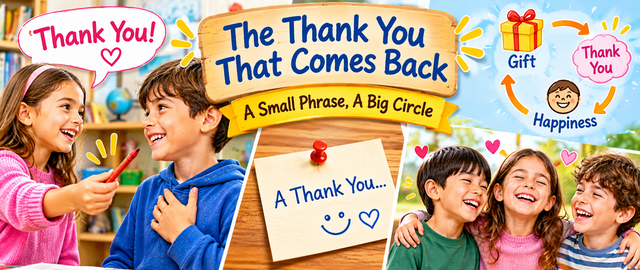
The Thank You That Comes Back
英語本文:約275語
When someone gives you something, you say thank you. Two small words. But they do a lot.
Mia gives Sam a red crayon. Sam says, “Thank you.” Now Mia feels good. Her face lights up.
Sam did not just get a crayon. He gave something back. A thank you is a gift back.
What happens if you do not say it?
Mia gives Sam a red crayon. Sam says nothing. He just starts to draw.
Mia looks at him. Did he like it? Is he happy? She does not know. Her good feeling goes away a little.
Thank you tells the other person, “I saw what you did. I like it. I am happy you did it.”
It closes the loop. Like a little circle. Gift, thank you, done. Both people feel good.
Thank you also helps next time.
Sam says thank you for the red crayon today. Tomorrow, when Sam wants the blue crayon, Mia wants to give it. Because she remembers the thank you.
If Sam says nothing today, tomorrow Mia may not want to give the blue crayon. Not because she is mad. Just because she did not feel the circle close.
You can say thank you for big things. And for small things. For a crayon. For help. For waiting.
You can say it fast. You can say it slow. You can say it loud. You can say it soft. But say it so the other person can hear it.
Look them in the eye. Say, “Thank you.”
Then watch what comes back. A smile. That smile is their thank you for your thank you.
And the circle goes round again.
日本語対訳
返ってくるありがとう
誰かがあなたに何かをくれたとき、あなたはありがとうと言います。2つの小さな言葉。でもそれはたくさんのことをします。
ミアはサムに赤いクレヨンをあげます。サムは言います。「ありがとう」今、ミアは良い気分です。彼女の顔がぱっと明るくなります。
サムはクレヨンを手に入れただけではありません。何かをお返ししたのです。ありがとうはお返しの贈り物です。
もし言わなかったらどうなるでしょう?
ミアはサムに赤いクレヨンをあげます。サムは何も言いません。ただ描き始めます。
ミアは彼を見ます。気に入ったのかな?嬉しいのかな?彼女には分かりません。彼女の良い気分は少し消えてしまいます。
ありがとうは相手に伝えます。あなたがしてくれたことを見たよ。好きだよ。してくれて嬉しいよ、と。
それは輪を閉じます。小さな円のように。贈り物、ありがとう、完了。2人とも良い気分になります。
ありがとうは次回の助けにもなります。
サムは今日赤いクレヨンにありがとうと言います。明日、サムが青いクレヨンが欲しくなったとき、ミアはあげたくなります。なぜなら彼女はありがとうを覚えているからです。
もしサムが今日何も言わなければ、明日ミアは青いクレヨンをあげたくないかもしれません。怒っているからではありません。ただ輪が閉じたと感じなかっただけなのです。
大きなことにもありがとうと言えます。そして小さなことにも。クレヨンに。手伝いに。待ってくれたことに。
早く言ってもいいです。ゆっくり言ってもいいです。大きな声で言ってもいいです。小さな声で言ってもいいです。でも相手に聞こえるように言いましょう。
相手の目を見て。「ありがとう」と言いましょう。
それから何が返ってくるか見てみましょう。笑顔です。その笑顔はあなたのありがとうに対する彼らのありがとうです。
そして輪はまたぐるっと回ります。