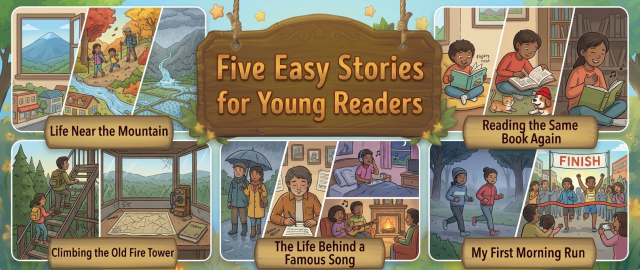
AIで生成した少しやさしい英文5話をまとめて掲載しています。
英文の難易度
CEFR:A1
英検:4級
語数:5話合計約1,517語
制作について
本記事の英文・日本語訳・英語難易度の評価は、AIを活用して作成したものです。
内容の正確性を保証するものではありません。
論理的な矛盾・文脈の破綻などが含まれている可能性や、歴史的事実・科学的な正確性・一般常識などに合致しない事柄が含まれている可能性があります。あくまでも英文を読む練習用の素材として考えて下さい。
「んっ?」と思うところがあっても、無視して読み続ける能力を獲得していただければ幸いです…
なお、難易度の評価は目安であり、CEFRや英検による公式な判定ではありません。
Life Near the Mountain
英語本文:約253語
I live near a mountain. The mountain is not very high. But it is very important for our town.
In the morning, I see the mountain from my window. When the sky is clear, the mountain is blue. When it rains, the mountain is gray. The mountain tells me about the weather.
People in my town go to the mountain often. On Saturday, many families walk on the mountain. There is a small path. The path is easy. Children can walk there. At the top, you can see the whole town. You can see houses, shops, and the river.
The mountain also gives us water. Rain falls on the mountain. Water goes down to our town. We use the water for drinking and for rice. Rice needs a lot of water. So the mountain helps our food.
In fall, the trees on the mountain change. Leaves become red and yellow. Many people come to see the colors. They take photos. They are very happy.
Some people think a mountain is just rock and trees. But for me, it is more. It is part of our life. It is like a neighbor. It is always there. It watches our town.
I feel good when I see the mountain. It makes me feel calm. It makes me feel that I am home. Even when I go far away, I think of the mountain. I think of my town.
A mountain is not only nature. It is also culture. It is part of who we are.
日本語対訳
山の近くの暮らし
私は山の近くに住んでいます。山はあまり高くありません。でも私たちの町にとってとても大切です。
朝、窓から山が見えます。空が晴れているとき、山は青いです。雨が降るとき、山は灰色です。山は天気について教えてくれます。
私の町の人々はよく山に行きます。土曜日には多くの家族が山を歩きます。小さな道があります。その道は簡単です。子どもたちも歩けます。頂上からは町全体が見えます。家や店や川が見えます。
山は私たちに水も与えてくれます。雨が山に降ります。水は私たちの町へ下りてきます。その水を飲み水や米のために使います。米はたくさんの水が必要です。だから山は私たちの食べ物を助けてくれます。
秋には山の木々が変わります。葉が赤や黄色になります。多くの人が色を見に来ます。写真を撮ります。とても幸せそうです。
山はただの岩や木だと思う人もいます。でも私にとってはそれ以上です。私たちの生活の一部です。隣人のようなものです。いつもそこにあります。私たちの町を見守っています。
山を見ると気持ちが良いです。穏やかな気持ちになります。家にいるように感じます。遠くへ行っても山のことを思います。町のことを思います。
山は自然だけではありません。文化でもあります。私たちが誰であるかの一部なのです。
Reading the Same Book Again
英語本文:約259語
Some people read a book once. Then they put it away.
But some people read the same book again. And again.
Why read it again? You already know the story.
You know who finds the treasure. You know who goes home.
But you read it again. And it feels a little new.
The first time, you read fast. You want to know what happens next. Does the dog run? Does the girl find her cat?
The second time, you know what happens. So you read slowly. You see small things.
You see the cat was on page two. You did not see it the first time.
You see the dog had a red hat. The first time, you did not look.
The third time, you hear the words. Not just the story. The words sound nice. Like music.
The same words. But now you like how they sound.
Also, you are new. You are a little older. Last year you were six. Now you are seven.
So you read the same book with new eyes.
The book did not change. You changed. So the book feels new.
That is why some people keep one favorite book. They read it every year.
They do not get bored. They find something new each time. A small thing they did not see before.
Next time you finish a book you love, do not put it far away.
Keep it close. Read it again next month. See what you find the second time. It may be a small hat or a quiet cat.
日本語対訳
同じ本をもう一度読む
本を一度だけ読む人もいる。それから片付けてしまう。
でも同じ本をまた読む人もいる。そしてまた読む。
なぜまた読むの?もう物語は知っているのに。
誰が宝物を見つけるか知っている。誰が家に帰るか知っている。
でもまた読む。そして少し新しく感じるのだ。
一度目は速く読む。次に何が起こるか知りたいからだ。犬は走るの?女の子は猫を見つけるの?
二度目は、何が起こるか分かっている。だからゆっくり読む。小さなものが見えてくる。
猫が2ページ目にいたのが見える。一度目には見えなかった。
犬が赤い帽子をかぶっていたのが見える。一度目は見ていなかった。
三度目は、言葉が聞こえてくる。物語だけではなく。言葉が素敵に聞こえる。音楽のように。
同じ言葉なのに。今はその響きが好きになる。
それに、あなた自身が新しいのだ。少し年をとった。去年は6歳だった。今は7歳だ。
だから同じ本を新しい目で読むのだ。
本は変わらなかった。あなたが変わったのだ。だから本が新しく感じるのだ。
だからお気に入りの一冊を取っておく人がいる。毎年読むのだ。
退屈しない。毎回何か新しいものを見つけるのだ。前には見えなかった小さなものを。
次に大好きな本を読み終えたら、遠くにしまわないで。
近くに置いておこう。来月また読んでみよう。二度目に何を見つけるか見てみよう。小さな帽子かもしれないし、静かな猫かもしれない。
Climbing the Old Fire Tower
英語本文:約327語
I climbed an old fire tower last summer.
Not a tall city tower. A tower in the woods. Made of wood and metal.
My uncle took me. He used to work there long ago. Not as a fire watcher, but he knew the man who did.
The tower is not used now. But you can still climb it. The steps creak.
At the top, a small room. Glass on all sides. You can see far. Trees and trees.
My uncle said, long ago, a man sat here every day in summer. His job was to watch for smoke.
No phones. No cameras. Just eyes and a map.
If he saw smoke, he would look at the map on the table. The map had lines like a spider web. Lines from the tower to the hills.
He would find where the smoke was. Find the crossing of the lines.
Then he would turn the crank on the phone. An old phone on the wall. Call the town. Say, “Smoke at hill three, near the river.”
The town would send a fire crew.
It was a quiet job. Many hours watching trees. Sometimes nothing for days.
But important. One small wisp of smoke spotted early can save a big forest.
Uncle showed me a log book still there. A dusty book. Inside, notes.
July 12, 1968. No smoke. Wind west. Clear.
July 13, 1968. Smoke on south hill at 3 pm. Called town.
July 14. No smoke.
Many pages like that.
I looked out the glass. The same view as the man in 1968. Trees and hills. No smoke that day.
We wrote our own note in a new notebook we brought. August 10. No smoke. Two people visited.
We left the note on the table.
The tower still watches, even with no watcher. Wind moves through the glass room.
But now it watches for visitors who climb to see far.
The old job is gone. The view stays.
日本語対訳
古い火の見櫓に登る
去年の夏、古い火の見櫓に登った。
高い都会の塔ではない。森の中の塔だ。木と金属でできている。
おじさんが連れて行ってくれた。彼は昔そこで働いていた。火の見張りとしてではないが、その仕事をしていた男の人を知っていた。
塔は今は使われていない。でもまだ登ることができる。階段がきしむ。
頂上には小さな部屋。全面ガラス張りだ。遠くまで見える。木々と木々だ。
おじさんは言った。昔、男の人が夏の間毎日ここに座っていた。仕事は煙を見張ることだった、と。
電話なし。カメラなし。ただ目と地図だけだ。
もし煙が見えれば机の上の地図を見るのだ。地図にはクモの巣のような線があった。塔から丘への線だ。
煙がどこにあるかを見つけるのだ。線の交差する場所を見つける。
それから電話のハンドルを回す。壁にある古い電話だ。町に電話する。丘の三番、川の近くで煙だ、と言う。
町は消防隊を送るだろう。
静かな仕事だった。木々を見張る何時間もの時間。時には何日も何もないことも。
だが重要な仕事だ。一つの小さな煙の筋を早く見つければ大きな森を救える。
おじさんはまだそこにある日誌を見せてくれた。埃っぽい本だ。中にはメモがある。
1968年7月12日。煙なし。風西。晴れ。
1968年7月13日。午後3時に南の丘で煙。町に電話した。
7月14日。煙なし。
多くのページがそのようなものだ。
私はガラス越しに外を見た。1968年の男と同じ景色だ。木々と丘。その日は煙はなかった。
私たちは持って来た新しいノートに自分たちのメモを書いた。8月10日。煙なし。二人の訪問者が来た、と。
メモを机の上に残した。
塔は見張りがいなくてもまだ見張っている。風がガラスの部屋を通り抜ける。
だが今は遠くを見るために登って来る訪問者を見張っている。
古い仕事はなくなった。景色は残る。
The Life Behind a Famous Song
英語本文:約341語
A song can live for many years. People may sing it at home, in a car, or with friends. Sometimes, they know every word but do not know who wrote it. Behind many songs, there is a person with a life, a dream, and a story.
Think about a person who writes songs. This person may start with a small idea. It may come from a walk in the rain, a talk with a friend, or a happy day at home. The writer puts these ideas into words and music. At first, the song may be known by only a few people. Later, it may reach many people in different places.
A famous song does not always come from an easy life. Some songwriters have known hard times. They may have lost a job, moved to a new town, or said goodbye to someone they loved. These things can change the way they see the world. When they write about their lives, other people may find their own feelings in the words.
This is one reason music is so special. A song can connect people who have never met. A person in one country may hear a song from another country and feel that the writer understands them. The words may be simple, but the feelings can be deep.
Songs can also help us remember the past. An old song may bring back a day at school, a long trip, or a person we miss. The song stays the same, but our lives change. When we hear it again, we may understand it in a new way.
The next time you hear a song you like, take a moment to think about the person who wrote it. What was happening in that person’s life? What did they want to say? You may not find all the answers. Still, asking these questions can make the song more meaningful.
A song is more than words and music. Sometimes, it is a small part of another person’s life that we can carry with us.
日本語対訳
有名な歌の向こうにある人生
歌は何年もの間、人々の心に残ることがあります。家で、車の中で、あるいは友人と一緒に歌うこともあるでしょう。歌詞をすべて知っていても、誰が作ったのかは知らないことがあります。多くの歌の背後には、人生や夢、物語を持つ一人の人間がいます。
歌を書く人について考えてみましょう。その人は、ささやかな思いつきから始めるかもしれません。それは雨の中の散歩や友人との会話、家で過ごした楽しい一日から生まれることもあります。作り手は、そうした考えを言葉と音楽にします。初めは、ほんの少しの人にしか知られていない歌かもしれません。しかし後に、さまざまな場所にいる多くの人々に届くことがあります。
有名な歌が、いつも平穏な人生から生まれるとは限りません。つらい時期を経験した作詞作曲家もいます。仕事を失ったり、新しい町へ引っ越したり、愛する人に別れを告げたりしたことがあるかもしれません。こうした経験は、世界の見方を変えることがあります。自分の人生について書くと、ほかの人がその言葉の中に自分自身の気持ちを見つけることもあります。
音楽が特別なものである理由の一つは、そこにあります。歌は、会ったことのない人同士を結びつけることがあります。ある国にいる人が別の国の歌を聞き、作り手が自分を理解してくれていると感じるかもしれません。言葉は簡単でも、そこに込められた気持ちは深いことがあります。
歌は過去を思い出す助けにもなります。古い歌を聞くと、学校で過ごした日や長い旅、もう会えない人のことがよみがえるかもしれません。歌そのものは変わりませんが、私たちの人生は変わっていきます。同じ歌をもう一度聞くと、以前とは違う意味を感じることもあります。
次に好きな歌を聞いたら、作った人について少し考えてみてください。その人の人生では、どんなことが起きていたのでしょう。その人は何を伝えたかったのでしょう。すべての答えは見つからないかもしれません。それでも、こうした問いを考えることで、その歌がもっと心に響くものになるでしょう。
歌は、単なる言葉と音楽ではありません。ときには、ほかの人の人生の一部を、私たちが心に携えていけるものなのです。
My First Morning Run
英語本文:約337語
Three months ago, I did not like sports at all. I worked at a desk all day and watched TV at night. I felt tired every morning. My old friend Ken called me and said, “Let’s start running together.”
At first, I said no. I thought running was too hard for me. I was not young, and I had no running shoes. But Ken said, “We will start very slowly. We will just walk and run a little.” So I bought cheap shoes at a big store and tried.
On the first day, we met at the park at six in the morning. It was cold and dark. We started to walk fast for ten minutes. Then we ran very slowly for two minutes. I was so tired and I wanted to give up. But Ken ran next to me and said, “You are doing well. Keep going.”
We ran three times every week. Monday, Wednesday, and Friday. After two weeks, I could run for five minutes without stopping. After a month, I could run for fifteen minutes. My legs were still tired, but my heart felt strong and happy. I started to go to bed early and get up early.
Last Sunday, we had a small race in our town. It was only three kilometers. Many people came – old people, young people, and children. I was nervous, but Ken and I ran together. We did not run fast. We just ran at our own speed. When we crossed the finish line, my wife and daughter were there. They cheered for us and took pictures.
Now, running is part of my life. I still work at a desk, but I feel much better. I have more energy and I sleep well at night. My daughter sometimes comes with us. She rides her bike next to us. If you feel tired every day, try to put on your shoes and go out in the morning. You do not need to run fast. Just start slowly and keep it up.
日本語対訳
初めての朝のランニング
三か月前、私はスポーツが全く好きではありませんでした。一日中机で仕事をして、夜はテレビを見ていました。毎朝疲れを感じていました。古い友人のケンが電話をかけてきて、「一緒に走り始めよう」と言いました。
最初は断りました。走るのは自分には難しすぎると思ったのです。若くもないし、ランニングシューズも持っていませんでした。でもケンは「とてもゆっくり始めるよ。ただ歩いて、少しだけ走るんだ」と言いました。それで大きな店で安い靴を買って、試してみました。
初日、私たちは朝六時に公園で会いました。寒くて暗かったです。十分間早歩きをしました。それから二分間とてもゆっくり走りました。とても疲れて、やめたくなりました。でもケンは私の横を走って「よくやっているよ。頑張って続けよう」と言いました。
私たちは毎週三回走りました。月曜日、水曜日、金曜日です。二週間後、止まらずに五分間走れるようになりました。一か月後には十五分間走れるようになりました。足はまだ疲れましたが、心は強く幸せに感じました。早く寝て早く起きるようになりました。
先週の日曜日、町で小さなレースがありました。たった三キロメートルでした。たくさんの人が来ました。お年寄り、若い人、子どもたちです。緊張しましたが、ケンと私は一緒に走りました。速くは走りませんでした。自分たちのペースで走ったのです。ゴールラインを越えた時、妻と娘がそこにいました。私たちを応援して、写真を撮ってくれました。
今では、走ることは私の生活の一部です。まだ机で仕事をしていますが、ずっと調子が良いです。もっと元気があり、夜もよく眠れます。娘も時々私たちと一緒に来ます。彼女は自転車で私たちの横を走ります。もし毎日疲れを感じているなら、靴を履いて朝外に出てみてください。速く走る必要はありません。ゆっくり始めて、続けてみてください。
ワンポイント英文解説(by AI)
5話の中から、日本人学習者が英語の感覚をつかむのに役立つ一文をピックアップして解説します。
The book did not change. You changed.
(『Reading the Same Book Again』より)
1. シンプルな自動詞 change の使い方
ここでの change は他動詞(「〜を変える」)ではなく、主語そのものが変化する自動詞(「変わる」)として使われています。目的語をとらずに「本は変わらなかった」「あなたが変化した」とすっきり言い切れる形です。
2. 否定と肯定を対比させるリズム
1つ目の文で「〜しなかった(did not change)」と否定し、続く短い文で「〜した(changed)」と肯定することで、対比がくっきり浮かび上がります。短い文を並べることで、英語ならではの歯切れよいリズムが生まれています。
3. 語順と意味のシンプルさ
「本が変わったのではなく、読んでいるあなた自身が変わったのだ」という深いテーマを、難しい語彙や複雑な構文を使わずに表現しています。多読ではこうした短い文の意味をそのまま受け取る練習が役立ちます。
「少しやさしい英語の短いお話5本(英検4級・A1/和訳あり)」全回一覧
1話約250語の短い英語ストーリー5話+日本語対訳のシリーズです。気になる回からどうぞ。